
Some days, I know I need a break, but spending money on spa treatments, wellness products, or expensive activities is not realistic. Fortunately, self care ideas that cost nothing can be just as refreshing when they address what my mind and body genuinely need.
Self-care does not have to look impressive on social media. It can mean drinking water, stepping away from a screen, resting without guilt, or calling someone who makes life feel lighter. The best practice is often the small action I can repeat consistently.
What Free Self-Care Really Means
Free self-care involves using the time, space, abilities, relationships, and everyday resources already available to you. Its purpose is not to escape every responsibility. It is to support your physical, mental, or emotional needs so that daily life feels more manageable.
A useful activity should leave you feeling calmer, clearer, rested, connected, or better prepared. Some forms of self-care are enjoyable, while others involve setting boundaries, asking for help, or completing a task that has been creating unnecessary stress.
Quick Resets for Busy Days

Short breaks can interrupt tension before it builds into exhaustion. You do not need an empty afternoon to take care of yourself.
Two-Minute Mental Breaks
Close your eyes and take five slow breaths. Relax your jaw, lower your shoulders, and notice where you are holding tension.
Look away from your screen and focus on something in the distance such as computer vision syndrome. This simple change gives tired eyes and an overloaded mind a brief rest.
Write down the one thought occupying most of your attention. Putting it on paper can make it feel easier to examine rather than endlessly repeat.
Five-Minute Mood Boosters
Play one song that changes your energy. You can dance, stretch, sing, or simply listen without doing anything else.
Stand near an open window and notice the temperature, sounds, and movement outside. A short sensory reset can bring your attention back to the present.
Complete one tiny task that has been bothering you. Reply to a message, clear a surface, refill your water, or put away an item that is out of place.
Free Self-Care for Mental Overload
Mental exhaustion often comes from carrying too many unfinished thoughts. Creating space can be more helpful than adding another activity to your schedule.
Empty Your Mental Inbox
Write every task, worry, reminder, and decision currently taking up space in your mind. Do not organize the list immediately. The first goal is simply to stop relying on your memory to hold everything.
Afterward, circle one item you can handle today. Cross out anything that is no longer important and postpone what does not require immediate attention.
Reduce Digital Noise
Turn off nonessential notifications for an hour. Move distracting apps away from your home screen and close browser tabs you are not using.
Choose one screen-free period each day, such as during breakfast, a walk, or the final 20 minutes before bed. This creates a natural pause without requiring a complicated digital detox.
Practice a Personal Check-In
Ask yourself three questions: What am I feeling? What do I need? What is one kind action I can take next?
Your answer might be rest, movement, food, quiet, reassurance, connection, or a clearer boundary. Naming the need makes it easier to choose an appropriate response.
No-Cost Physical Self-Care
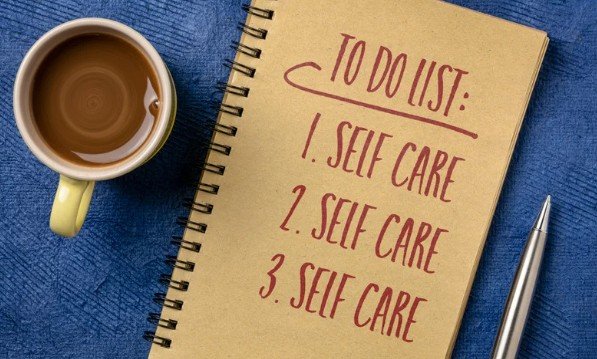
Physical care does not require workout equipment or a paid membership. Gentle actions can support comfort, mobility, and energy.
Move Without Pressure
Take a relaxed walk around your home, building, yard, or neighborhood. The goal does not have to be speed, calorie burning, or distance.
Stretch your neck, wrists, hips, calves, and lower back after sitting for a long period. Move slowly and stop if anything feels sharp or painful.
Put on music and move in whatever way feels natural. Dancing can provide light activity without turning movement into another performance goal.
Support Basic Needs
Drink a glass of water before reaching for another caffeinated drink. Eat a regular meal instead of waiting until low energy makes every decision harder.
Rest when your body feels unusually heavy or sore. Recovery is not laziness. It is part of maintaining enough energy for work, relationships, and everyday responsibilities.
Dim bright lights in the evening and allow your environment to become quieter. A predictable wind-down period can make bedtime feel less abrupt.
Emotional Care Without Spending Money
Emotional self-care means making room for feelings without allowing them to control every decision.
Name What You Feel
Use specific words instead of saying you feel “bad.” You might be disappointed, lonely, overstimulated, worried, embarrassed, frustrated, or exhausted.
Clear language can make emotions feel less confusing. It can also reveal whether you need reassurance, distance, rest, problem-solving, or support.
Speak to Yourself More Kindly
Notice how you talk to yourself after a mistake. Replace harsh statements with the kind of response you would give someone you care about.
You do not have to pretend everything is fine. Try a balanced statement such as, “This was difficult, but one difficult moment does not define my ability.”
Set One Small Boundary
Delay a nonurgent response when you need time to think. Say no to an additional commitment when your schedule is already full.
A boundary does not always require a long explanation. A respectful, direct answer can protect your time and reduce resentment.
Free Social Self-Care

Connection can support well-being, but social care should feel safe and mutual. Call someone you trust instead of waiting until you have the perfect reason. Send a short message telling a friend that you appreciate them or are thinking about them.
Invite someone to join you for a walk, a conversation, or a quiet evening at home. Meaningful time together does not require dining out or buying entertainment.
You can also step back from conversations that repeatedly leave you drained. Protecting your energy is sometimes as important as seeking company.
Creative Care Using What You Have
Creativity gives your attention somewhere new to go. The result does not need to be polished, useful, or shared.
Write a short story, poem, journal entry, or list of things you want to remember. Doodle on scrap paper, rearrange photographs, sing, or create a playlist for a particular mood.
Try describing an ordinary object in unusual detail. Small creative challenges can shift your brain away from repetitive thoughts and toward curiosity.
Low-Energy Care for Difficult Days
On hard days, self-care should become smaller rather than disappear.
Open the curtains, change into clean clothes, drink water, or sit somewhere different for five minutes. Choose one action that makes the next hour slightly easier.
You can also lie down without your phone, listen to quiet sounds, unclench your hands, or send one honest message asking for company or practical help.
Self-care is not always enough to address persistent distress. Reaching out to a qualified professional or trusted support service can be an important form of care when difficult feelings interfere with daily life.
Frequently Asked Questions
1. What Are the Best Self Care Ideas That Cost Nothing?
Helpful options include walking, stretching, journaling, resting, breathing slowly, calling a friend, spending time outside, reducing notifications, listening to music, setting boundaries, and completing one small task that has been causing stress.
2. Is Resting Considered Self-Care?
Yes. Intentional rest supports recovery when you are physically or mentally tired. However, it helps to notice whether the rest leaves you refreshed or becomes a way to avoid a problem that needs attention.
3. How Can I Practice Self-Care at Home?
Create a simple routine using activities already available to you. Stretch, take a screen break, tidy one small area, write down your thoughts, prepare a regular meal, or spend several quiet minutes without multitasking.
4. What Is the Easiest Form of Self-Care?
The easiest form is meeting your most immediate basic need. This could mean drinking water, taking a few slow breaths, resting your eyes, eating something nourishing, stepping outside, or asking another person for support.
Your Best Care Does Not Need a Price Tag
I have learned that self care ideas that cost nothing work best when I choose them according to what I actually need, not what a perfect wellness routine is supposed to look like. A short walk, an honest boundary, or five quiet minutes may seem small, but repeated actions can make daily life feel steadier. Choose one free idea today and give it your full attention.
Leave a Reply