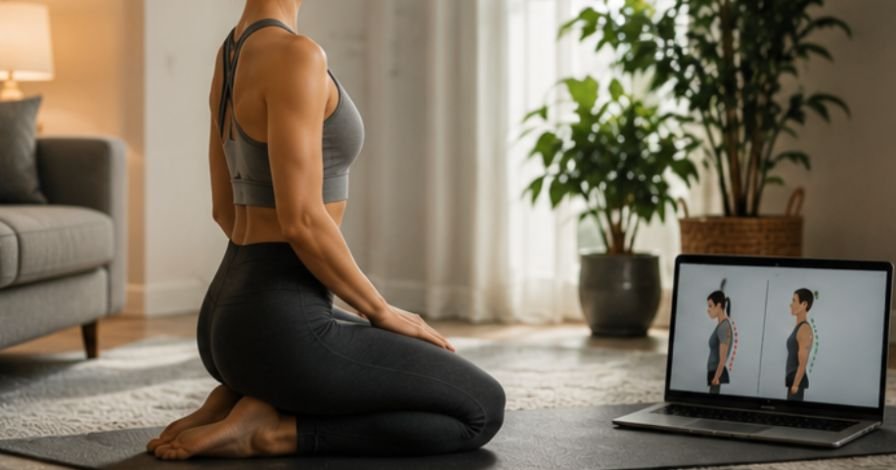
Long hours at a desk can turn sitting into rounded shoulders, a stiff neck, and an aching back. My posture often slips after screen time, so exercises for better posture at home feel so practical. They need little space and only a few focused minutes.
Good posture is not rigid. It helps your muscles support comfortable movement without forcing your body into one rigid position.
Key Takeaways
- Move slowly and focus on control.
- Train your back, neck, core, and hips.
- Stretch tight areas without forcing them.
- Take movement breaks during long sitting periods.
- Stop if you feel sharp pain or numbness.
What Good Posture Does To You?
These movements can make daily life more comfortable.
Your Body Hates Being A Desk Ornament
Exercises for better posture at home are necessary because your body is built to move, not freeze in a chair. Tight chest muscles, weak upper back muscles, and a forward head position can make even simple tasks feel tiring. A short routine wakes up sleepy muscles and gives your spine a much-needed change of scenery.
Posture Affects Everyday Movement
Poor alignment can influence how you lift groceries, climb stairs, use your phone, and even breathe. Rounded shoulders may limit comfortable arm movement, while weak core muscles can make your lower back work harder than necessary.
Better body awareness helps you notice and change slouching habits before they become uncomfortable.
Upper Body And Back
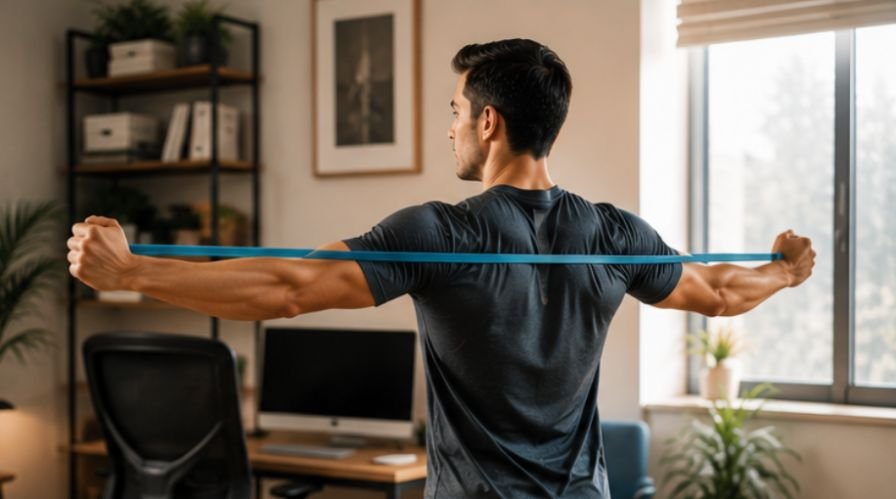
These movements open the chest and support the shoulders.
Wall Angels
Stand with your back, head, and hips against a wall. Move your feet slightly forward and bend your elbows to 90 degrees. Keep your ribs relaxed as you slowly slide your arms upward, then bring them back down.
Continue for one to two minutes without forcing tight shoulders. Wall angels strengthen the mid-back and improve shoulder control after prolonged sitting.
Chest Opener
Stand tall and clasp your hands behind your lower back. Gently pull your shoulders down and back while lifting your chest slightly. Keep your neck relaxed and avoid arching your lower back.
Hold for five slow breaths and repeat five times. This stretches the chest and supports relaxed shoulder positioning. Use a towel if clasping your hands feels uncomfortable.
Spine And Core
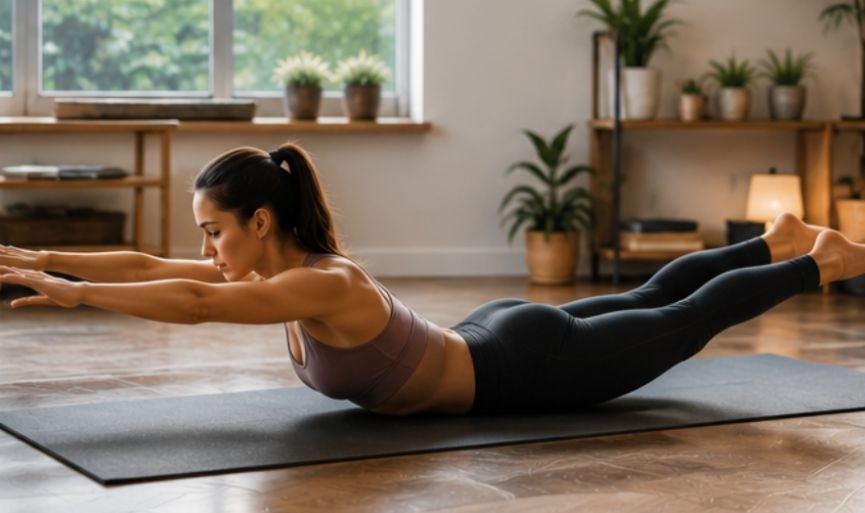
These exercises mobilize the spine and strengthen the core.
Cat-Cow Stretch
Begin on your hands and knees with your wrists under your shoulders and knees under your hips. Breathe out as you round your back toward the ceiling and gently lower your head. Then breathe in as you lower your belly and lift your chest.
Repeat for one minute through a comfortable range. Cat-Cow reduces stiffness and prepares your back for strengthening work.
Bird Dog
Stay on your hands and knees. Tighten your abdomen gently, then reach your right arm forward while extending your left leg backward. Keep your hips level and avoid twisting your body.
Hold for three seconds, return, and switch sides for two minutes. Bird Dog strengthens the core, glutes, shoulders, and back while building spinal control.
Neck Alignment
These movements address screen-related forward head posture.
Chin Tuck
Sit or stand tall with your eyes looking forward. Pull your chin straight backward as though you are making a double chin. Keep your head level and avoid looking down.
Hold for five seconds and repeat ten times. The movement should feel gentle, not forceful. Chin tucks activate deep neck muscles and improve awareness of where your head sits over your shoulders.
Shoulder Reset
Let your arms hang naturally beside your body. Lift your shoulders toward your ears, roll them backward, and allow them to settle down. Repeat five slow times while breathing normally.
This reset may ease tension after typing or phone use. Keep the movement relaxed rather than squeezing your shoulder blades forcefully.
How To Use The Routine
Use this order for a practical home workout.
Build A Ten-Minute Session
Start exercises for better posture at home with one minute of Cat-Cow to loosen your spine. Move to Wall Angels for one minute, followed by five Chest Opener repetitions. Complete ten Chin Tucks before performing Bird Dog for two minutes.
Finish with Shoulder Resets and a short walk around the room. Rest whenever your form becomes sloppy. A controlled ten-minute routine is more useful than a rushed workout filled with extra repetitions.
Choose A Realistic Schedule
Perform the complete routine three to five times each week. On busy days, choose Wall Angels, Chin Tucks, and Cat-Cow for a quick three-minute movement break.
Consistency matters more than intensity. Build endurance gradually rather than doubling the routine during your first week.
Fit It Into Daily Life
Set a reminder to stand every 30 to 60 minutes. Walk briefly, stretch your chest, or complete a few Chin Tucks. These breaks prevent prolonged stillness.
Keep your screen near eye level and your feet supported. Raise your phone toward your face instead of dropping your head.
Planning easy no-cook lunches with protein and fiber can also make busy workdays feel more balanced without requiring extra preparation time.
Common Posture Mistakes
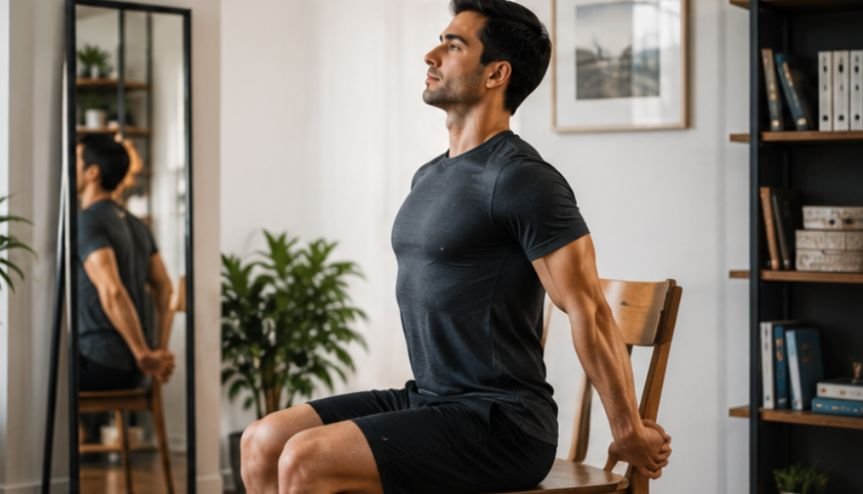
Avoid these errors for safer, better progress.
Forcing A Straight Position
Pulling your shoulders back constantly can create tension in your neck and upper back. Your spine has natural curves, so it should not look completely flat.
Aim for relaxed alignment that still lets you breathe and move freely.
Ignoring The Lower Body
Posture is not controlled by the neck and shoulders alone. Your core, hips, legs, and glutes help support you during standing, walking, and lifting.
Adding bodyweight back exercises at home can further strengthen the muscles that support your spine and shoulder blades. Add walking, squats, and glute bridges as your fitness improves. Whole-body strength supports more efficient movement.
Exercising Through Pain
Mild effort and a gentle stretch are normal. Sharp pain, numbness, tingling, dizziness, or weakness are warning signs.
Stop if symptoms appear. Seek professional advice if pain persists, follows an injury, interrupts sleep, or worsens with movement.
Frequently Asked Questions
1. Can You Correct Years Of Bad Posture?
Yes, many long-term posture habits can improve through regular strength training, mobility work, better workstation setup, and frequent movement breaks. Structural conditions may require professional assessment, but comfort, control, and muscular endurance can still improve.
2. What Exercise Is Best For Correcting Posture?
No single movement fixes every posture pattern. Wall Angels, Cat-Cow, Chin Tucks, Bird Dog, rows, and chest stretches work well together because they improve mobility, upper-back strength, neck alignment, and core stability.
3. How To Correct Posture In 7 Days?
Use exercises for better posture at home daily, adjust your screen height, take frequent walking breaks, and practise gentle alignment checks. Seven days can improve awareness and stiffness, but lasting strength and habit changes usually require several weeks.
4. How To Reverse Slouching Posture?
Strengthen your upper back, core, and glutes while stretching your chest and moving your spine regularly. Avoid forcing your shoulders backward. Consistent exercise, better screen habits, and frequent position changes create more sustainable improvement.
Stand Tall And Keep Moving
Better posture develops through patience, movement, and stronger support muscles. Practising exercises for better posture at home several times each week can loosen stiff areas, improve body control, and make everyday positions feel more comfortable. Keep each movement gentle, progress gradually, and remember that changing positions often is just as important as sitting or standing tall.
Leave a Reply