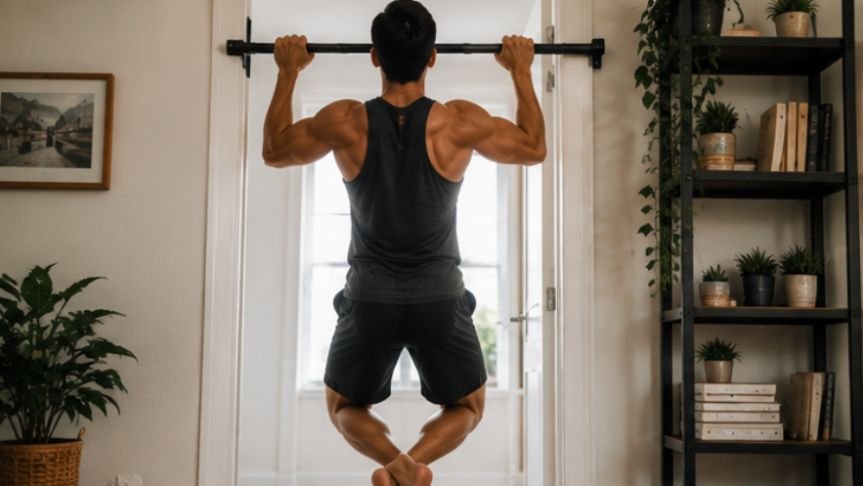
Long desk hours once left my shoulders tight and my upper back weak. That pushed me to try bodyweight back exercises at home as a practical way to move better without machines or heavy weights. With a mat, a wall, and careful form, you can train the muscles that support posture, pulling strength, and daily movement.
Key Takeaways
- Train your upper back, lats, lower back, and shoulder blades.
- Move slowly and avoid momentum during every repetition.
- Use only secure surfaces for pulling exercises.
- Progress with pauses, repetitions, tempo, or harder angles.
- Stop if you feel sharp, spreading, or unusual pain.
Your Back Deserves All Your Attention
Strong back muscles support everyday movement, balanced posture, and safer lifting.
Your Posture Needs Backup
The muscles around your shoulder blades help control your arms and support an upright position. They balance routines dominated by push-ups, pressing, and long sitting.
Daily Life Uses Pulling Strength
Opening doors, carrying bags, climbing, and moving furniture involve your back. Back training also teaches your core and hips to support the spine during reaching and lifting.
Why This Topic Matters
Bodyweight back exercises at home are quiet heroes in a balanced routine. Mirror muscles may get more attention, but your back keeps your shoulders steady and your movement coordinated.
Focused exercises can help you feel less folded after sitting and more capable during daily activities.
Floor And Mat Exercises
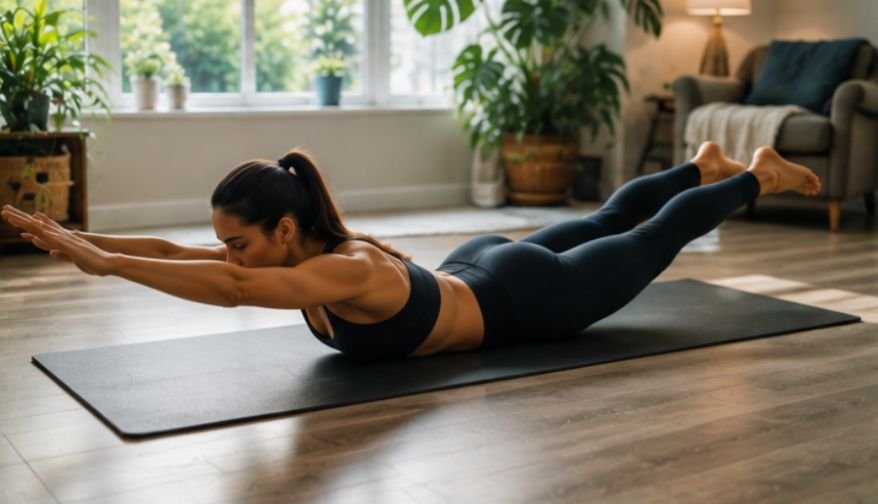
Begin with controlled movements that train your posterior chain without gym equipment.
Superman
Lie face down with your arms overhead and legs straight. Brace your stomach gently, then lift your chest, arms, and legs a small distance.
Hold for two seconds and lower slowly. Keep your neck neutral and avoid forcing height. Complete eight to twelve controlled repetitions.
Reverse Snow Angel
Lie face down with your arms overhead and palms down. Lift your hands slightly, sweep your arms outward, and continue toward your hips.
Squeeze your shoulder blades near your sides. Reverse slowly and perform eight to twelve repetitions without overextending your lower back.
Bird Dog
Start on your hands and knees. Extend one arm forward and the opposite leg backward while keeping your hips level and spine neutral. Hold briefly, return with control, and complete eight to ten repetitions per side.
Pulling And Scapular Movements
These exercises develop pulling mechanics and shoulder-blade control that floor raises cannot fully provide.
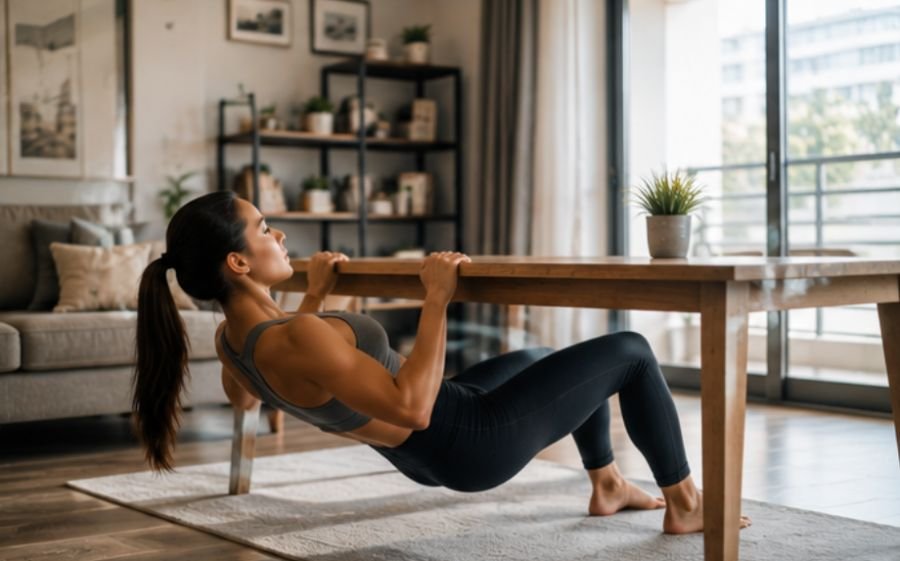
Inverted Row
Lie beneath a professionally secured low bar or a truly stable table. Grip the support, straighten your body, and pull your chest upward by driving your elbows back.
Lower slowly. Bent knees are easier, while straight legs are harder. Never use weak doors, loose sheets, or uncertain anchors.
Scapula Push-Up
Begin in a high plank with straight arms and hands under your shoulders. Let your chest sink slightly as your shoulder blades move together.
Push the floor away until the shoulder blades spread apart. Keep your hips steady and complete ten to fifteen controlled repetitions.
Floor Or Wall Slides
Stand against a wall or lie on the floor with bent knees. Place your arms in a goalpost shape and keep your ribs controlled.
Slide your arms upward without shrugging or arching. Move only through a comfortable range and complete eight to twelve repetitions.
How To Do Bodyweight Back Exercises At Home
A useful routine needs a clear order, good form, and gradual progression.
Prepare Your Body
Begin with three to five minutes of gentle movement. Thoracic spine mobility exercises can help prepare your mid-back for smoother rotation, reaching, and shoulder movement.
Roll your shoulders, reach overhead, rotate your upper back carefully, and practice easy bird dogs. The warm-up should prepare you, not tire you.
Choose A Balanced Mix
Select one lower-back exercise, one upper-back movement, one shoulder-blade drill, and one pulling exercise when secure equipment is available.
A beginner session could combine supermans, reverse snow angels, scapula push-ups, and bird dogs. Add inverted rows after your setup and technique are dependable.
Control Every Repetition
Lift or pull for two seconds, pause briefly, and return for two or three seconds. This slower tempo creates useful tension without momentum.
End the set when posture changes. Quality beats quantity.
Build A Weekly Routine
Consistent training is more useful than one exhausting session. Pairing your exercise routine with best high-fiber foods for everyday meals can also support a balanced daily wellness plan.
Beginner Plan
Complete two sets of supermans, reverse snow angels, bird dogs, scapula push-ups, and wall slides. Perform eight to twelve repetitions per exercise.
Train twice weekly on nonconsecutive days and rest about forty-five seconds between exercises.
Intermediate Plan
Perform three sets of reverse snow angels, inverted rows, scapula push-ups, bird dogs, and wall slides. Use eight to fifteen repetitions.
Make rows harder by straightening your legs or pausing at the top.
Progress Without Weights
Your body adapts, so the routine must become gradually more challenging.
Change One Variable
Add two repetitions, a longer pause, an extra set, or a slower lowering phase. Change only one factor so you can judge your response.
Progress when every repetition stays steady. Reduce the challenge when form becomes unstable. Record your repetitions so each future session has a clear, realistic progression target.
Use Better Leverage
Longer body positions make many exercises harder. Straight legs challenge inverted rows, while longer arm positions increase the demand of floor raises.
Increase range only when you can control it. Difficulty should come from muscular tension, not awkward joint positions.
Common Mistakes To Avoid
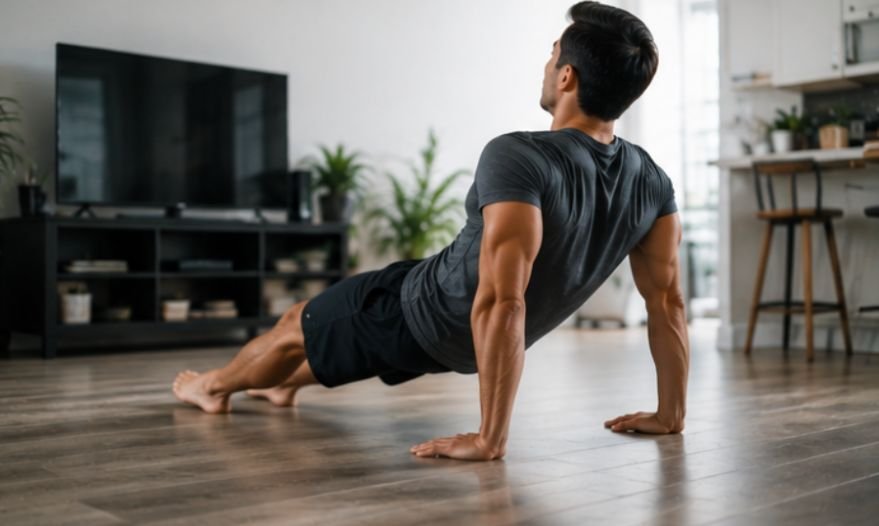
Small errors can shift work into your neck, arms, or lower spine.
Lifting Too High
Supermans and reverse snow angels need only a small lift. Raising too far often creates unnecessary lower-back pressure.
Think about reaching long instead of bending backward. Keep your stomach lightly braced and stop when movement loses control.
Shrugging The Shoulders
During rows and slides, avoid pulling your shoulders toward your ears. Keep your neck relaxed and guide your shoulder blades down and back. Use fewer repetitions when shrugging begins.
Ignoring Pain Signals
Normal muscle effort may feel tiring, but sharp pain, numbness, tingling, or spreading discomfort is different.
Stop and consult a qualified healthcare professional when symptoms persist, worsen, or interfere with daily activity.
Frequently Asked Questions
1. How To Work Out Your Back With Bodyweight?
Use bodyweight back exercises at home that combine supermans, reverse snow angels, bird dogs, scapula push-ups, wall slides, and secure inverted rows. Together, they train spinal support, shoulder control, and pulling strength.
2. What Are The Big 3 Exercises For Back?
For home training, inverted rows, bird dogs, and reverse snow angels form a useful trio. They cover horizontal pulling, spinal stability, and upper-back shoulder-blade control.
3. How Do I Work Out My Back Without Weights?
Use slow floor exercises, wall slides, scapular movements, and secure rows. Increase difficulty with longer pauses, controlled tempos, additional repetitions, or harder leverage.
4. Can You Build Back Muscle Without Weights?
Yes, especially as a beginner. Muscles respond to tension and progressive overload. Harder angles, rows, pauses, and challenging sets can support growth without traditional weights.
Strong Back, Better Adventures
Bodyweight back exercises at home can make your routine balanced, practical, and easier to maintain. Begin with supermans, reverse snow angels, and bird dogs, then add scapular drills and safe inverted rows as your control improves. Train consistently, progress gradually, and respect pain signals. A stronger back supports better posture, smoother movement, and more confidence in daily life.
Leave a Reply