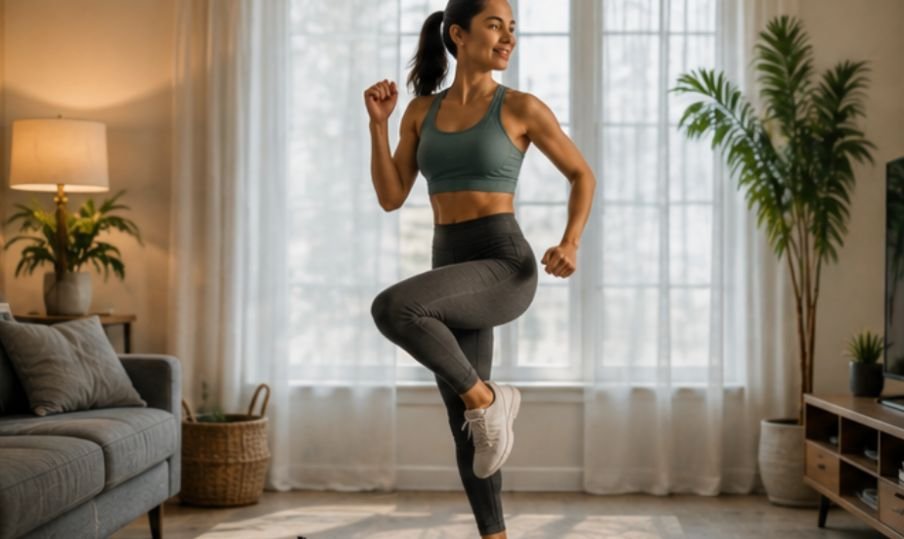
Finding time to exercise can feel impossible, especially when running or jumping leaves your knees complaining. That is exactly why low impact cardio workoutsat home have become my favorite way to stay active. These simple movements increase your heart rate, improve endurance, and protect your joints, making fitness feel achievable for beginners and experienced exercisers alike.
Key Takeaways
- Low impact workouts protect your joints while improving heart health.
- No equipment is needed for an effective home routine.
- Short sessions performed consistently deliver excellent results.
- Small changes in speed can increase workout intensity.
- Proper form is more important than moving fast.
Making Low Impact Cardio Effective
Understanding how these exercises work helps you get better results.
Your Heart Still Works Hard
Low impact simply means at least one foot stays in contact with the ground. It does not mean the workout is easy. By using continuous movements and large muscle groups, your heart rate rises naturally while reducing unnecessary stress on your joints.
Simple exercises like marching, side stepping, and standing knee drives can become surprisingly challenging when performed continuously. Increasing your arm movement and maintaining a steady pace creates an excellent cardiovascular workout without jumping.
Perfect for Every Fitness Level
These workouts work well for beginners, older adults, people returning after a break, or anyone recovering from minor joint discomfort. Since every exercise can be adjusted, you stay in control of the intensity instead of forcing your body beyond its limits.
Even experienced exercisers often include low impact training on recovery days because it supports cardiovascular endurance while allowing muscles and joints to recover from harder workouts.
Prepare for Success
A little preparation makes every workout safer and more enjoyable.
Create a Comfortable Workout Space
Choose a flat area where you can move freely in every direction. Remove anything that might cause you to trip and wear comfortable athletic shoes with good support if your flooring is hard or slippery.
Keep a water bottle nearby and make sure the room has enough fresh air. These simple steps help you stay comfortable throughout your session.
Start with a Proper Warm Up
Never rush into fast movements. Spend three to five minutes performing gentle arm circles, shoulder rolls, slow marches, heel taps, and side steps to wake up your muscles gradually.
A proper warm up improves circulation, prepares your joints for movement, and reduces the chance of stiffness during your workout. Those few minutes often make the entire session feel smoother.
How to Do Low Impact Cardio Workouts at Home

Now comes the fun part where movement meets results.
Begin with Simple Cardio Moves
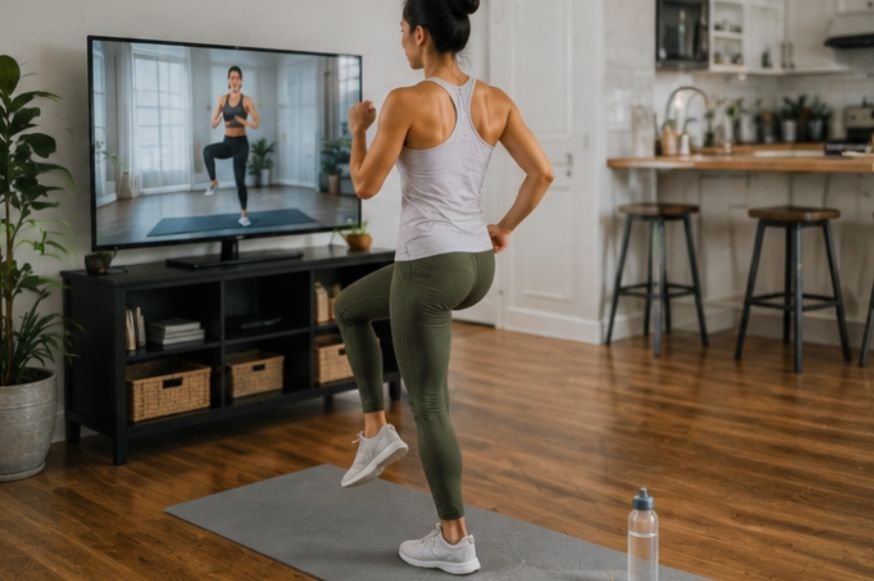
Start by marching in place while pumping your arms naturally. Lift each knee only to a comfortable height and maintain an upright posture. Continue for thirty to forty five seconds before moving to the next exercise.
Perform low impact jumping jacks by stepping one foot sideways while raising your arms overhead instead of jumping. Alternate sides continuously to keep your heart rate elevated while protecting your joints.
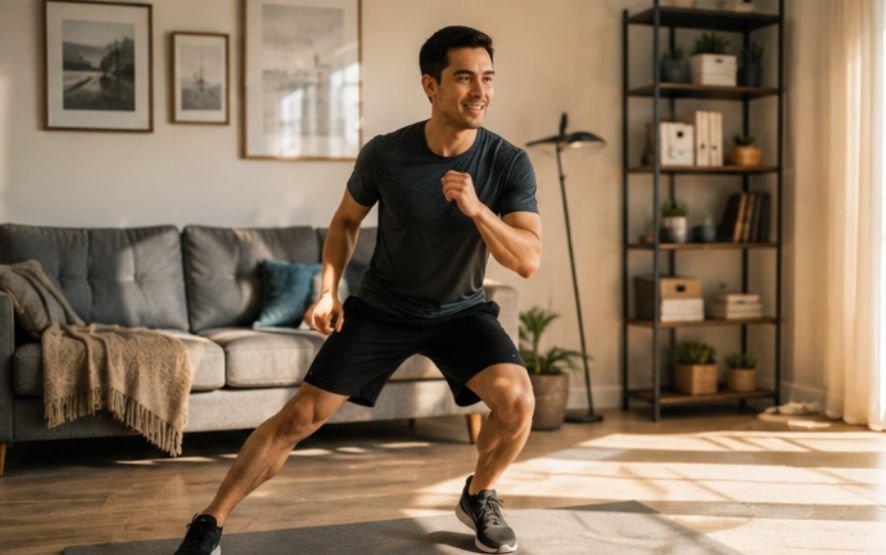
Modified speed skaters are another excellent choice. Step side to side while lightly tapping your back foot behind your body instead of leaping. This movement improves coordination while remaining gentle on your knees.
Add More Dynamic Exercises
Next, perform squat to front kicks. Complete a comfortable bodyweight squat, stand up, then extend one leg into a gentle front kick before repeating on the opposite side. Keep every movement controlled and avoid rushing.
Standing bicycle crunches help strengthen your core while maintaining cardiovascular activity. Bring one elbow toward the opposite knee, then switch sides using slow, controlled movements. This exercise improves balance as well as coordination.
Shadow boxing with light foot movement also keeps your heart working while engaging your upper body. Throw controlled punches while marching softly in place for an effective full body cardio challenge.
Follow a Smart Workout Structure
Begin every session with three to five minutes of warming up using light marching and arm circles.
Perform each exercise continuously for thirty to forty five seconds, followed by ten to fifteen seconds of recovery. This timing keeps your breathing elevated while allowing enough recovery to maintain good form.
Complete three total circuits to create an effective fifteen to twenty minute workout. Many experienced exercisers appreciate timed intervals because they provide structure while keeping intensity consistent throughout the session.
Simple Ways to Increase Results
Small adjustments often produce surprisingly big improvements.
Increase Intensity Without Jumping
Rather than adding impact, increase your walking speed, pump your arms more actively, or shorten your recovery periods slightly. These changes raise your heart rate while keeping the workout joint friendly, even with hip or knee pain.
You can also increase your movement range by taking slightly wider steps or lifting your knees a little higher as your fitness improves. Progress gradually instead of making large jumps in difficulty.
Listen to Your Body
Feeling warm and breathing harder are completely normal during cardio exercise. Sharp pain, dizziness, or worsening joint discomfort are signals to stop and recover.
Fitness improves through consistency rather than pushing through pain. Choosing modifications whenever necessary helps build a long lasting exercise habit that supports your health.
Real Life Tips for Daily Success
Fit Exercise Into Busy Days
Not every workout has to last an hour. Even fifteen to twenty minutes before breakfast, during lunch, or after work can improve your energy and cardiovascular health.
Breaking longer workouts into two shorter sessions also works well for many people. Every minute of movement contributes toward your weekly activity goals.
Mix Cardio with Strength Training
Low impact cardio works even better when combined with simple strength exercises such as chair squats, wall push ups, glute bridges, and calf raises.
Adding exercises for better posture at home can also improve core control, shoulder alignment, and body awareness during cardio movements. Strong muscles provide better support for your joints during daily activities.
Alternating cardio and strength sessions throughout the week creates a balanced fitness routine that improves endurance, mobility, and overall health without overwhelming your body.
Frequently Asked Questions
1. What is the most effective low-impact cardio?
The most effective low impact cardio depends on consistency and effort. Brisk walking, marching in place, step touches, cycling, swimming, and bodyweight home circuits all improve cardiovascular fitness while remaining gentle on your joints.
2. What is the 3-3-3 rule for cardio workouts?
The 3-3-3 rule commonly refers to balancing strength training, cardio sessions, and active recovery throughout the week. It encourages variety, supports recovery, and helps maintain a sustainable long term exercise routine.
3. How to do low-impact cardio at home?
Perform continuous movements such as marching in place, low impact jumping jacks, modified speed skaters, standing bicycle crunches, and squat to front kicks for timed intervals while maintaining controlled movement and proper posture.
4. Is 20 minutes of cardio a day enough?
Yes. Twenty minutes of moderate cardio each day can significantly improve heart health, endurance, and calorie expenditure. Combined with strength training and regular movement, it supports long term fitness goals effectively.
Keep Your Heart Happy One Step at a Time
The best low impact cardio workouts at home are the ones you actually enjoy enough to repeat every week. You do not need expensive machines, endless space, or high impact movements to become fitter. Start with simple exercises, move at your own pace, celebrate small improvements, and let consistency do the heavy lifting. Your heart, joints, and future self will all appreciate the effort.
Leave a Reply