
I used to think sleeping longer was the answer whenever I felt drained. Then I started noticing that even after getting eight hours, I still woke up feeling sluggish if my bedtime changed every night. It wasn’t the amount of sleep that kept throwing me off. It was the lack of consistency.
I also found that trying to create the perfect nighttime routine usually lasted a few days before life got in the way. Once I shifted my attention to showing up at roughly the same time every day instead of chasing perfection, better sleep started feeling much more achievable.
What Is a Sleep Consistency Challenge?

A sleep consistency challenge is a simple commitment to go to bed and wake up at nearly the same time every day, including weekends. Rather than focusing only on the number of hours you sleep, the goal is to help your body’s internal clock know exactly when it’s time to rest and when it’s time to be alert.
Many people underestimate how much their schedule changes throughout the week. Staying up late on Friday, sleeping in on Saturday, and then trying to wake up early on Monday creates a cycle that feels similar to changing time zones every weekend. This pattern, often called social jet lag, can leave you feeling tired even if you technically spent enough time in bed.
The challenge works because it replaces dramatic lifestyle changes with small, repeatable habits that gradually become automatic.
Why Sleeping at the Same Time Makes Such a Difference
Your body depends on cues like sunlight, darkness, temperature, and routine to regulate your circadian rhythm. When those signals stay consistent, your brain begins preparing for sleep before your head even reaches the pillow.
A regular sleep schedule supports natural melatonin production, making it easier to fall asleep without relying on endless scrolling or extra caffeine the next morning. Over time, many people also notice fewer energy crashes, better concentration, and a smoother morning routine.
Consistency also improves how your body moves through deep sleep and REM sleep. These stages play an important role in memory, learning, physical recovery, and emotional regulation. Missing them repeatedly can leave you feeling mentally exhausted even after what looked like a full night’s sleep.
Your 14-Day Sleep Consistency Challenge
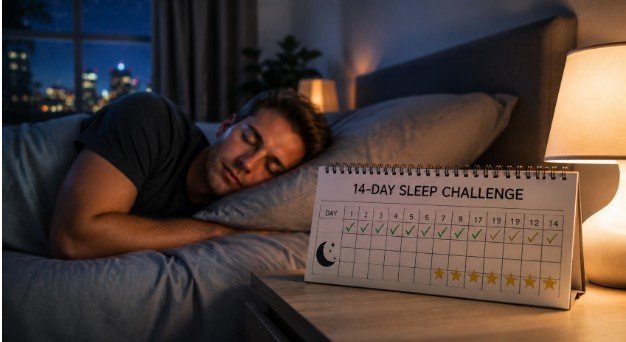
The best challenges don’t require perfection. They simply ask you to repeat a few meaningful habits every day.
Days 1 to 5: Create Your Sleep Anchor
Choose one wake-up time and stick with it every day. Even on weekends, avoid sleeping in more than 30 to 60 minutes.
As soon as you wake up, spend about 20 minutes outside or near natural sunlight. Morning light tells your brain that the day has started and begins the countdown toward nighttime sleep.
If your current bedtime is much later than your goal, don’t change it all at once. Move it earlier by only 15 to 30 minutes during the week so your body has time to adjust naturally.
Days 6 to 10: Build a Wind-Down Routine
About an hour before bed, reduce activities that keep your brain stimulated.
Turn off bright screens, dim overhead lights, and choose one calming activity you genuinely enjoy. Reading a printed book, stretching, listening to relaxing music, or practicing slow breathing all help create a predictable signal that bedtime is approaching.
Repeating the same sequence every evening is often more effective than constantly searching for new sleep hacks.
Days 11 to 14: Support Your Routine During the Day
Good sleep begins long before bedtime.
Keep caffeine to the first half of the day, ideally finishing coffee or energy drinks by around 2:00 PM. Try to eat heavier meals a few hours before bed instead of right before sleeping.
Physical activity also helps regulate your body clock. Even a short walk during the afternoon can make it easier to fall asleep later that night.
By the end of the second week, many people begin noticing that their bedtime feels more natural instead of forced.
The Simple Daily Checklist
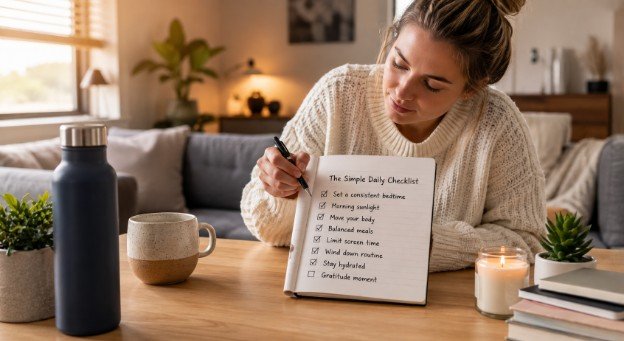
Following the same routine each day removes guesswork and helps your body recognize familiar patterns.
- Morning: Get around 20 minutes of natural sunlight soon after waking.
- Afternoon: Avoid caffeine after 2:00 PM, so stimulants have time to leave your system.
- One hour before bed: Turn off bright screens and reduce blue light exposure.
- Thirty minutes before bed: Dim the lights and spend time reading, stretching, or relaxing instead of working.
These habits may seem small on their own, but together they create powerful signals that reinforce a healthy sleep schedule.
Mistakes That Can Break Your Momentum
One late night doesn’t ruin your progress, but several inconsistent nights in a row can make it harder for your body to maintain a rhythm.
Common setbacks include staying up much later on weekends, drinking caffeine late in the afternoon, using your phone in bed, or trying to “catch up” by sleeping until noon.
Instead of giving up after one bad night, return to your normal wake-up time the next morning. That simple decision helps your internal clock recover much faster than sleeping in for several extra hours.
Many people also discover that improving sleep naturally complements practical ways to recover from mental fatigue, since quality rest gives the brain time to recover instead of constantly operating under stress.
Signs the Challenge Is Working

Success isn’t measured only by the number of hours you sleep.
You may begin falling asleep faster, waking up before your alarm, or feeling more alert during the morning. Afternoon energy often becomes steadier, and relying on multiple cups of coffee may become less necessary.
Another positive sign is consistency itself. When bedtime starts feeling natural rather than something you have to force, your body has begun adapting to the routine you’ve created.
FAQs: Sleep Consistency Challenge: The Simple Routine Your Body Will Thank You For
How long does a sleep consistency challenge take to show results?
Many people notice small improvements within one to two weeks, while stronger long-term benefits develop with continued consistency.
Can I sleep in on weekends?
It’s best to keep your wake-up time close to your weekday schedule. Sleeping in more than an hour can disrupt your body’s internal clock.
What if I can’t fall asleep at my planned bedtime?
Don’t force it. Continue following your wind-down routine and maintain your regular wake-up time so your body gradually adjusts.
Is sleep consistency more important than sleeping longer?
Both matter, but maintaining a regular schedule helps your body use sleep more efficiently and supports better long-term health.
Why Your Best Nights Start Long Before Bed
A better night’s sleep rarely begins the moment you turn off the lights. It starts with the choices you make throughout the day, from getting outside in the morning to limiting caffeine in the afternoon and giving yourself time to unwind at night. The sleep consistency challenge works because it replaces unrealistic expectations with habits that are easy to repeat and easier to maintain.
When your schedule becomes predictable, your body spends less time trying to catch up and more time giving you the deep, refreshing sleep you’ve been looking for.
Leave a Reply