
I started paying closer attention to my sleep after realizing that getting seven or eight hours in bed didn’t always mean waking up refreshed. Some mornings I felt just as tired as if I had barely slept, even though I thought I was doing everything right.
The more I observed my daily habits, the more I noticed that the biggest problems weren’t obvious. They were small routines that had slowly become normal, like checking my phone before bed, drinking coffee later than I realized, or sleeping in on weekends. None of them seemed harmful on their own, but together they quietly affected how well I slept.
Sleep Quality Isn’t Just About Hours
Many people focus on how long they sleep, but sleep quality often matters just as much. Deep sleep and REM sleep are the stages where the body repairs muscles, processes memories, supports metabolic health, and prepares the brain for the next day.
When everyday habits interrupt those stages, you may still log enough hours in bed while waking up feeling sluggish, unfocused, or dependent on caffeine. Modern lifestyles are full of subtle distractions that interfere with your body’s natural sleep cycle without making it obvious.
Blue Light Keeps Your Brain Awake
Smartphones, tablets, laptops, televisions, and even bright LED lighting have become part of nearly every evening. While they’re convenient, they also expose your eyes to blue light when your brain should be preparing for sleep.
Blue light suppresses melatonin, the hormone responsible for signaling that it’s time to rest. Instead of winding down naturally, your brain continues acting as though it’s still daytime.
This doesn’t always mean you’ll struggle to fall asleep immediately. Instead, your sleep cycle may shift later, reducing the amount of restorative sleep your body gets throughout the night.
Replacing late-night scrolling with reading a book, gentle stretching, or simply dimming the lights can help your body transition into sleep more naturally.
That Afternoon Coffee May Still Be Working

Many people avoid coffee after dinner but don’t think twice about grabbing another cup late in the afternoon.
Caffeine has a surprisingly long half-life, often remaining in your system for five to seven hours. Even eight hours later, enough caffeine may still be circulating to interfere with the brain chemicals that help you fall asleep.
Energy drinks, certain teas, sodas, and chocolate can contribute as well. If you regularly struggle to fall asleep despite feeling tired, moving your last caffeinated drink earlier in the day is one of the simplest changes worth trying.
A Warm Bedroom Can Quietly Reduce Deep Sleep
Comfort doesn’t always mean warmth.
Your body naturally lowers its core temperature before sleep. If your bedroom is overly warm because of central heating, poor airflow, or heavy synthetic bedding, your body has to work harder to cool itself.
That extra effort may keep your heart rate elevated and reduce the amount of deep sleep you experience.
A cooler bedroom, breathable bedding, and fresh airflow often make a noticeable difference without requiring expensive sleep products. Even small environmental adjustments can improve how rested you feel the next morning.
Alcohol Doesn’t Improve Sleep the Way It Seems To
A glass of wine or another alcoholic drink may make you feel sleepy faster, which is why many people believe it helps them sleep better.
The reality is different.
Alcohol tends to fragment the second half of the night by disrupting REM sleep, one of the most important stages for memory, emotional regulation, and mental recovery. Heavy meals close to bedtime can have a similar effect by forcing your digestive system to remain active while your body is trying to rest.
Finishing dinner a few hours before bed and limiting alcohol near bedtime often leads to more refreshing sleep over time.
Weekend Sleep-Ins Can Reset Your Progress
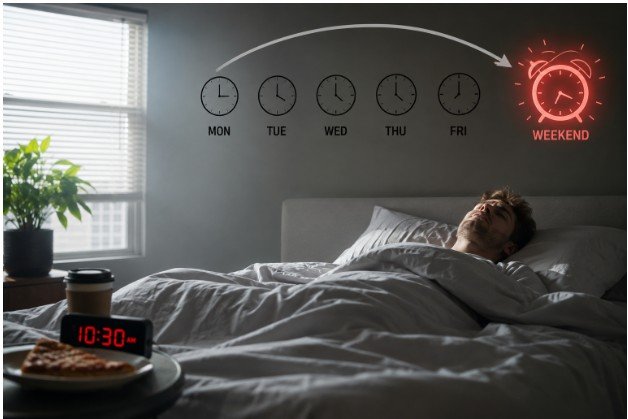
Sleeping late on weekends feels like catching up after a busy week, but it often creates what’s known as social jet lag.
When your bedtime and wake-up time shift by several hours every weekend, your circadian rhythm has to readjust every Monday. That constant reset makes it harder to fall asleep at your usual bedtime and can leave you feeling tired for the first few days of the week.
Maintaining a similar schedule throughout the week doesn’t mean giving up flexibility. Even keeping your wake-up time within an hour of your weekday routine helps your biological clock stay more consistent.
If you’re already working on a sleep consistency challenge, limiting large weekend schedule changes is one of the most effective ways to build lasting progress.
Small Changes Create Better Nights
Improving sleep quality rarely comes from one dramatic fix. Instead, it usually comes from stacking simple habits that support your body’s natural rhythm.
Consider starting with these practical adjustments:
- Put screens away 30 to 60 minutes before bedtime.
- Keep your bedroom cool, dark, and quiet.
- Finish caffeine by early afternoon.
- Avoid heavy meals and alcohol close to bedtime.
- Wake up at roughly the same time every day.
None of these habits are difficult on their own. Together, they create an environment where your brain and body know exactly when it’s time to sleep.
FAQs: How Modern Lifestyles Quietly Damage Sleep Quality Without You Noticing
Can I sleep eight hours and still have poor sleep quality?
Yes. Frequent interruptions, reduced deep sleep, or limited REM sleep can leave you feeling tired even after spending enough time in bed.
Does blue light really make that much difference?
For many people, yes. Evening blue light delays melatonin production, making it harder for your body to prepare for sleep naturally.
Is sleeping late on weekends unhealthy?
Occasionally isn’t a problem, but regularly shifting your sleep schedule by several hours can disrupt your circadian rhythm and create social jet lag.
What’s the easiest habit to improve sleep quality?
Keeping a consistent wake-up time is one of the most effective starting points because it helps regulate your body’s internal clock and supports healthier sleep patterns.
Why Your Everyday Habits Matter More Than You Think
Sleep quality is shaped long before your head touches the pillow. The choices you make throughout the day, from when you drink coffee to how often you check your phone at night, gradually teach your body what to expect. Small adjustments may not feel dramatic at first, but over time they create a healthier rhythm that supports deeper sleep, steadier energy, and better recovery.
The best sleep routine isn’t built through perfection. It’s built through consistent habits that quietly work in your favor every single day.
Leave a Reply