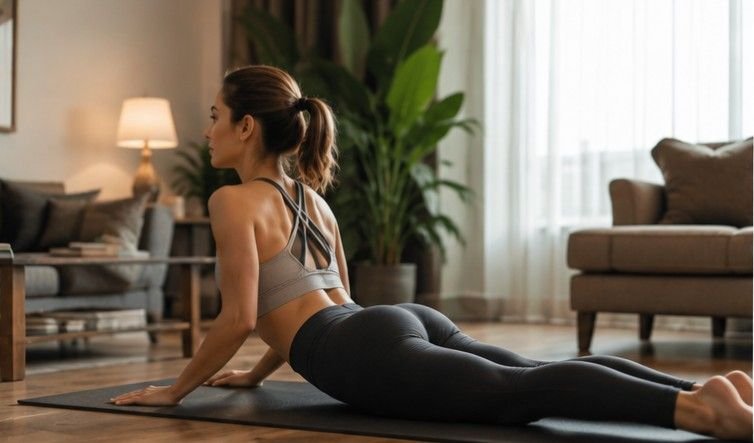
A stiff lower back can make standing up, tying your shoes, or reaching for a cupboard feel harder than expected. My go-to approach is not aggressive bending. It is a controlled routine of stretches for lower back stiffness that restores movement, relaxes tight muscles, and helps the body feel more comfortable during activity.
Key Takeaways
- Gentle movement works better than forcing a deep stretch.
- Hold most positions for 20 to 30 seconds.
- Stretch the hips, glutes, and hamstrings too.
- Use slow breathing to reduce muscle tension.
- Stop if pain feels sharp, spreading, or worse.
Why This Routine Beneficial?
A stiff back can make even picking up a sock feel dramatic. That is why stretches for lower back stiffness matter. They may improve mobility, reduce muscle guarding, and make daily movement feel less restricted. The goal is not extreme flexibility but also to inculcate self care habits. It is easier movement, better control, and less hesitation.
Why Your Lower Back Feels Tight
Lower-back stiffness rarely comes from one muscle. Long sitting, hard workouts, awkward sleep positions, limited hip mobility, and reduced activity can all contribute. The lumbar area may tighten because nearby muscles are not sharing movement well.
Sitting Limits Natural Motion
Hours at a desk keep the hips bent and the spine in one position. The hip flexors may tighten, the glutes may become less active, and the lower back may compensate.
Stand every 30 to 60 minutes and walk briefly. Small movement breaks are easier to maintain than one long evening session.
Tight Hips Affect The Back
The hips, glutes, and hamstrings control the pelvis during walking, bending, and lifting. When these areas feel restricted, the lower back may move more than it should.
A balanced routine should include hip flexor, glute, and hamstring stretches. This often feels more useful than repeatedly pulling on the lower back alone.
Morning Stiffness Needs Patience
Your back may feel less mobile after hours of sleep. Jumping into a deep forward bend can feel uncomfortable, so begin with small movements. Pelvic tilt exercises, knee rolls, and a short walk are useful first steps.
Prepare Before Stretching
Simple checks make the routine safer. Stretching should create mild tension, not pain or pressure.
Use A Comfortable Range
Keep every movement within a range where you can breathe normally. Aim for gentle pulling at around two or three out of ten in intensity.
Move slowly. Avoid bouncing, jerking, or holding your breath because these habits may increase muscle guarding.
Watch For Warning Signs
Stop and seek medical advice for severe pain, leg weakness, groin numbness, bowel or bladder changes, fever, unexplained weight loss, or pain after a serious fall.
Radiating pain, tingling, or worsening symptoms also need professional assessment.
How To Do Stretches for Lower Back Stiffness
These movements follow a sequence, starting with gentle spinal motion before longer hip and leg stretches. Use a mat, move slowly, and rest whenever needed.
Knee-To-Chest Stretch
Lie on your back with your knees bent and feet flat. Bring one knee toward your chest while holding behind the thigh or over the shin.
Hold for five seconds, release, and switch sides. Repeat two or three times per leg. Bring both knees inward only if comfortable.
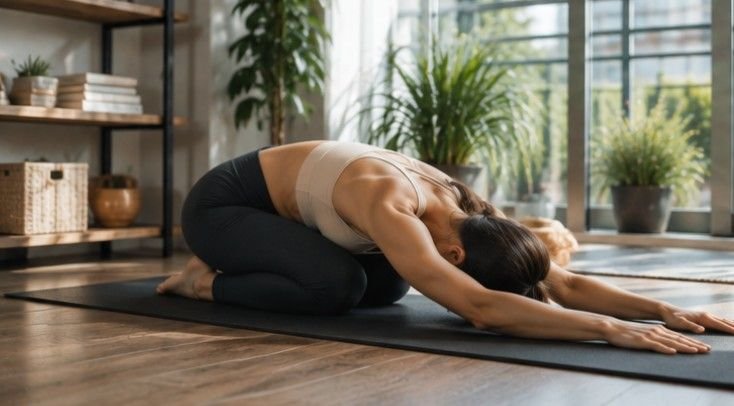
Child’s Pose
Kneel with your big toes close together and knees comfortably apart. Sit your hips toward your heels while reaching your arms forward.
Hold for 20 to 30 seconds and breathe into your ribs. Use a cushion if needed, and skip the position if kneeling hurts.
Cat-Cow Stretch
Begin on your hands and knees. Exhale as you round your back toward the ceiling and tuck your chin. Inhale as you soften your stomach and lift your chest.
Repeat eight to ten times smoothly. Keep the range comfortable and avoid dropping heavily into the lower back during Cow.
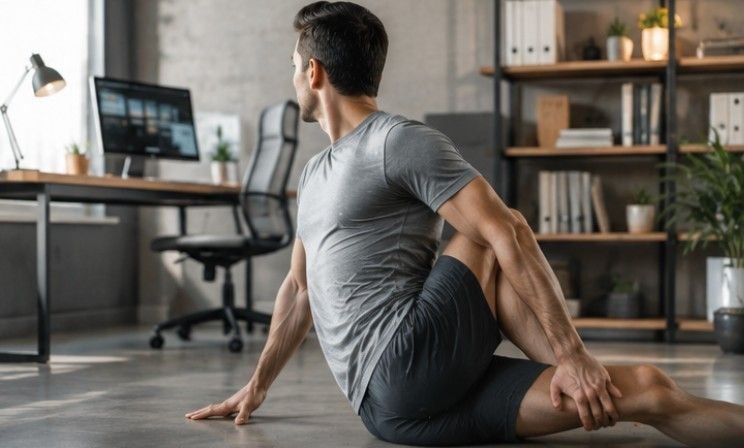
Lower Back Rotational Stretch
Lie on your back with your knees bent and feet flat. Keep your shoulders on the floor and slowly let both knees move toward one side.
Hold for 10 to 20 seconds, return to the center, and switch sides. Use a pillow under the knees if needed.
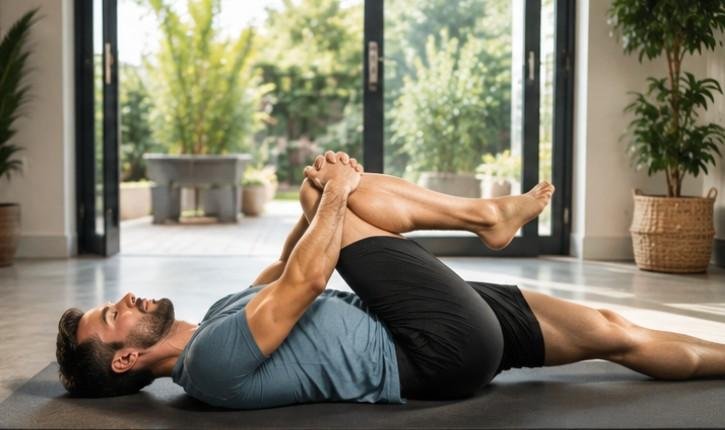
Figure-Four Glute Stretch
Lie on your back and cross one ankle over the opposite thigh. Hold behind the supporting thigh and draw the leg toward you.
Hold for 20 to 30 seconds before changing sides. Keep the crossed foot flexed and stop if the position causes knee pain or discomfort.
Hip Flexor Stretch
Kneel with one foot forward and padding beneath the back knee. Stand tall, tighten the glute on the kneeling side, and shift forward slightly.
Hold for 20 seconds, then switch sides. Avoid arching the lower back. You should feel the stretch at the front of the hip.
Supported Hamstring Stretch
Lie on your back and loop a towel around one foot. Lift that leg while keeping the knee slightly bent.
Hold for 20 seconds per side. Do not pull the leg as high as possible. Keeping the lower back relaxed matters more than straightening the knee.
Build A Ten-Minute Routine
Start with one minute of walking, followed by pelvic tilts and knee rolls. Continue with knee-to-chest, Cat-Cow, and Child’s Pose. Finish with the figure-four, hip flexor, and hamstring stretches.
Use these stretches for lower back stiffness once daily or after long sitting. Consistency matters more than intensity, so choose a routine you can repeat comfortably.
Match It To Your Day
For morning stiffness, focus on pelvic tilts, knee rolls, and Cat-Cow. After desk work, prioritize walking, hip flexor stretching, and gentle rotation.
After training, stretch the glutes and hamstrings gently. Choose movements that improve comfort without increasing symptoms.
Support Mobility With Strength
Stretching may ease temporary tightness, but strength helps the body manage movement. Add bridges, bird dogs, and bodyweight squats on separate days once comfortable.
Walking, position changes, and resistance training make mobility more useful. The goal is a back that feels capable, not simply flexible.
Frequently Asked Questions
1. How Do I Loosen A Stiff Lower Back?
Begin with stretches for lower back stiffness such as pelvic tilts, knee rolls, knee-to-chest movements, and Cat-Cow. Move gently, breathe slowly, and repeat consistently instead of forcing a deeper range.
2. How To Decompress A Tight Lower Back?
Lie on your back with your calves supported on a chair and breathe slowly for several minutes. This may relax surrounding muscles, but avoid forceful hanging or traction without professional guidance.
3. What Causes Extreme Tightness In The Lower Back?
Extreme tightness may result from prolonged sitting, muscle guarding, overtraining, limited hip mobility, strain, joint irritation, or nerve-related issues. Severe or persistent symptoms need professional assessment.
4. Why Is My Back So Inflexible?
Back inflexibility can come from inactivity, repeated postures, tight hips or legs, fear of movement, previous injury, or natural anatomy. Gradual mobility and strength work may improve movement over time.
Loosen Up And Move On
The best stretches for lower back stiffness are gentle, repeatable, and practical. Start with small spinal movements, include the hips and glutes, and avoid chasing extreme flexibility. A calm ten-minute routine can improve comfort and confidence, but worsening pain, unusual symptoms, or lasting stiffness should be discussed with a healthcare professional.
Leave a Reply