
Waking up shouldn’t feel like booting up a rusty machine that takes forever to load. Pouring coffee while your lower back complains makes mornings tough. Doing a morning stretching routine for flexibility right next to your bed unlocks a smoother version of your day without needing heavy gear.
You don’t need a lengthy workout to feel the difference. Even five to ten minutes of intentional movement can loosen tight muscles, improve circulation, and help your body transition from sleep to activity. Whether you spend your day at a desk, on your feet, or commuting, beginning with gentle mobility prepares your muscles and joints for whatever lies ahead while creating a calm, positive mindset.
Why Morning Flexibility Matters?
Consistency matters far more than intensity. A short stretching routine practiced every morning gradually improves flexibility, balance, and posture without placing unnecessary stress on your body. Over time, these small daily improvements can make everyday movements—such as climbing stairs, lifting groceries, or reaching overhead—feel easier and more comfortable.
How Overnight Immobility Tightens Muscles
Lying still for hours in a single sleeping position causes muscles to cool down and adapt a shortened resting length. This overnight compression restricts your natural range of motion and makes simple tasks like tying your shoes feel surprisingly rigid.
The Connection Between Joints and Daily Energy
Stiff joints send subtle stress signals to your brain, making you feel mentally exhausted long after your alarm goes off. Gentle elongation acts as a physical wake-up call, releasing feel-good hormones and lubricating your joints for effortless daily movement.
Why You Need This Habit Today
Starting your morning stretching routine for flexibility keeps your body fluid and young. Instead of feeling trapped in a stiff shell, you wake up your nervous system, boost blood flow, and dodge those annoying midday aches with zero fuss.
Tips Before You Begin Your Morning Stretching Routine
Before starting your stretches, give your body a moment to wake up naturally. Take several slow, deep breaths and avoid jumping immediately into aggressive movements. Since your muscles are cooler after sleeping, gentle, controlled motions are much safer and more effective than bouncing or forcing deeper stretches.
Wear comfortable clothing that allows unrestricted movement, and perform your routine on a yoga mat or another supportive surface. Focus on breathing steadily throughout every exercise because controlled breathing helps muscles relax and improves flexibility. If a stretch causes sharp pain instead of mild tension, reduce the range of motion or stop altogether. The goal is to wake up your body—not push it to its limits.
Most importantly, listen to your body each morning. Some days you may feel looser than others, and adjusting your routine accordingly helps build a sustainable habit.
Stretching should support your energy rather than become another demanding task on your schedule. Understanding how balancing work and recovery helps stay productive can encourage you to combine movement with adequate rest, helping your body remain active without becoming physically or mentally drained.
Spine and Core Waking

Cat-Cow Spine Awakening
Begin your session on your hands and knees in a comfortable tabletop position on a soft mat. Inhale deeply as you drop your belly toward the floor and look up gently toward the ceiling. Exhale completely as you round your spine upward toward the sky, tucking your chin and repeating this fluid motion for ten smooth repetitions.
Move slowly with your breathing rather than rushing through the repetitions. This exercise gently mobilizes every segment of your spine while encouraging better posture throughout the day.
Thread the Needle
If your shoulders feel especially tight, pause for an extra breath before switching sides. The stretch can also relieve tension caused by prolonged computer or smartphone use.
Tight hip flexors are especially common among people who sit for long periods. Stretching them regularly helps improve walking mechanics and reduces unnecessary strain on the lower back.
Lumbar Rotation for Back Release
Lie flat on your back with your knees bent and your feet planted firmly on the floor. Gently drop both knees together from one side to the other in a slow windshield wiper motion for sixty seconds. This simple movement releases lower back tension and preps your core for the day ahead.
If your shoulders feel especially tight, pause for an extra breath before switching sides. The stretch can also relieve tension caused by prolonged computer or smartphone use.
Lower Body and Hips
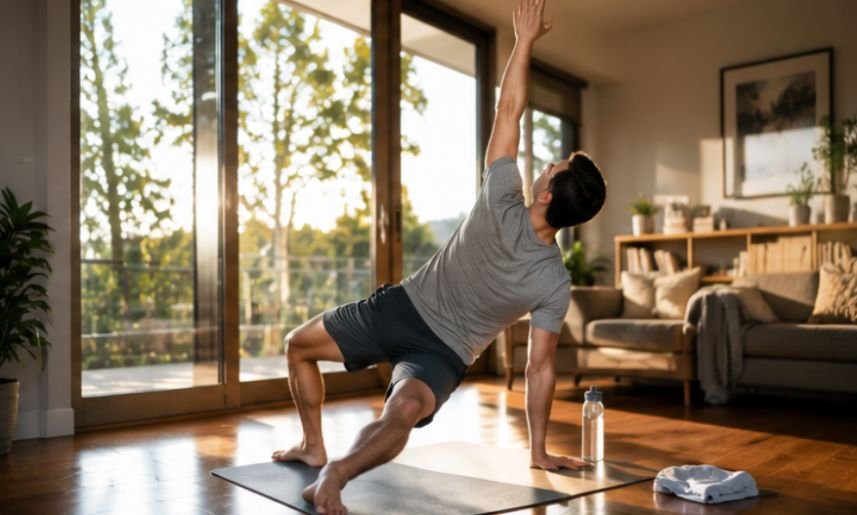
Hip Flexor Lunge Stretch
Step one foot forward into a comfortable low lunge while keeping your back knee resting on the floor. Press your hips forward gently while keeping your chest lifted high to stretch the front of your hip for thirty seconds. Switch sides carefully to ensure balanced mobility through your lower half.
Half-Kneeling Hamstring Stretch
Shift your weight backward smoothly from your low lunge position until your front leg straightens out completely. Point your toes upward toward the ceiling and hinge forward gently from your hips for thirty seconds per side. This stretch targets tight hamstrings and improves overall leg flexibility.
Upper Body and Final Release

Morning mobility is also a useful opportunity to address posture habits that build up during desk work, driving, or frequent phone use. Learning how to fix rounded shoulders can help you combine chest-opening stretches with upper-back strengthening for better shoulder alignment and more comfortable movement.
Thread the Needle Upper Back Relief
Return to your hands and knees and slide one arm underneath your chest to reach across the floor. Allow your shoulder and the side of your head to lower gently toward the mat for twenty seconds per side. This targets your upper back and shoulder blades to melt away desk posture tension.
Child’s Pose Final Release
Push your hips all the way back onto your heels while extending your arms far forward on the floor. Rest your forehead comfortably on your mat and take five deep, slow breaths to finish your session. This calming posture signals to your nervous system that you are centered and ready for the day.
Frequently Asked Questions
1. Is it good to stretch as soon as I wake up?
Yes, gentle stretching wakes up your nervous system, improves blood circulation, and releases overnight muscle tension, provided you move slowly and avoid forcing cold joints into deep ranges.
2. What is the 5-5-5-30 morning workout routine?
It is a structured fitness trend featuring intervals of core, upper body, and lower body movements, though dedicated flexibility routines focus primarily on mobility rather than intense conditioning.
3. Does stretching help morning stiffness?
Targeted mobility work increases synovial fluid production in your joints, which directly lubricates them and reduces that stiff, groggy feeling after sleeping.
4. Is stretching a good morning routine?
It is one of the best habits to build because it requires zero equipment, takes under ten minutes, and sets a calm, healthy tone for the entire day.
Stretch Into Greatness Today
Embracing a consistent morning stretching routine for flexibility bridges the gap between groggy sleep and vibrant daily energy. Spending just a few minutes unlocking your joints transforms how you move, feel, and conquer your daily tasks with absolute ease.
Leave a Reply