
Long hours at a laptop can make the chest tight and the upper back tired. That forward slump often appears slowly, so it is easy to ignore until shirts hang differently or shoulder movement feels restricted. Learning how to fix rounded shoulders starts with small, consistent changes rather than forcing the body into an uncomfortable pose.
Here is why learning how to fix rounded shoulders deserves attention before the slump becomes your unofficial signature pose. Forward shoulder positioning can make overhead reaching, pressing, pulling, and deep breathing feel less comfortable, especially after long periods of sitting.
What Rounded Shoulders Mean?
Rounded shoulders describe a resting position where the shoulders sit forward, the upper arms rotate inward, and the shoulder blades spread apart. The head may also drift forward during phone use, desk work, driving, gaming, or reading.
This position can be flexible and habit related, but it may also reflect pain, injury, spinal shape, or limited shoulder movement. A mirror check can offer clues, but it cannot diagnose the cause. Persistent discomfort or major asymmetry needs professional assessment.
Tight Areas
The chest muscles often become stiff after prolonged sitting or repeated pressing exercises. The front of the shoulders may also feel restricted, making it harder to raise the arms smoothly without arching the lower back.
Weak Areas
The rhomboids, lower trapezius, rear shoulders, and rotator cuff help control the shoulder blades. These muscles may not be truly weak, but they can lack endurance after hours of sitting.
Check Your Starting Point
Stand naturally before a mirror with your arms relaxed. Notice whether your palms face backward, your thumbs turn inward, or one shoulder sits higher. Next, raise both arms overhead while keeping the ribs relaxed.
Watch for lower-back arching, shoulder pinching, or difficulty bringing the arms beside the ears. Repeat after gently lengthening your upper back. Easier movement may suggest that posture and thoracic mobility influence your range.
Record your starting range and repeat the checks monthly, using comfort and control as progress markers rather than appearance.
How to Fix Rounded Shoulders Step by Step

The best method combines mobility, stretching, strengthening, and posture practice. Complete this sequence three to five times weekly. Move slowly, breathe normally, and stop any exercise that causes sharp pain, tingling, numbness, or worsening discomfort.
Open the Upper Back
Sit on a sturdy chair with the backrest touching the middle of your upper back. Support your head lightly, lean backward over the chair, then return slowly.
Complete six repetitions without forcing the neck or flaring the ribs. This thoracic extension drill helps the shoulders reach overhead with less compensation.
Do the Doorway Stretch
Bend your elbows to 90 degrees and place your forearms against a doorway. Step forward until you feel a gentle chest stretch. Keep the shoulders relaxed.
Hold for 15 to 30 seconds and repeat three times. Adjust elbow height for comfort. Mild tension is enough because aggressive stretching may irritate the shoulder.
Try the Chest Opener
Stand tall and place loose fists against your lower back. Move the elbows gently backward and slightly upward while keeping the ribs down and chin level.
Hold for 15 seconds and repeat three times. Avoid forcing the shoulders downward. This quick stretch works well during desk breaks.
Perform Wall Angels
Stand with your back and head near a wall, feet slightly forward, and arms in a goalpost shape. Slide the arms upward while keeping the ribs controlled and shoulders relaxed.
Complete three sets of 10 repetitions. Your hands do not need to stay against the wall. Use a pain-free range without shrugging or arching.
Practice Scapular Retraction
Sit or stand tall. Draw the shoulder blades gently back and down, as though holding a pencil between them. Keep the neck loose.
Hold for five seconds and repeat 10 times. The squeeze should feel controlled, not aggressive. Do not maintain this position all day.
Add Band Pull-Aparts
Hold a light resistance band at chest height. Pull it apart until the arms open comfortably, then return slowly. Keep the shoulders low and ribs stacked.
Perform two sets of 10 to 12 repetitions. Start light because excessive resistance often causes shrugging and poor form.
Improve Daily Habits
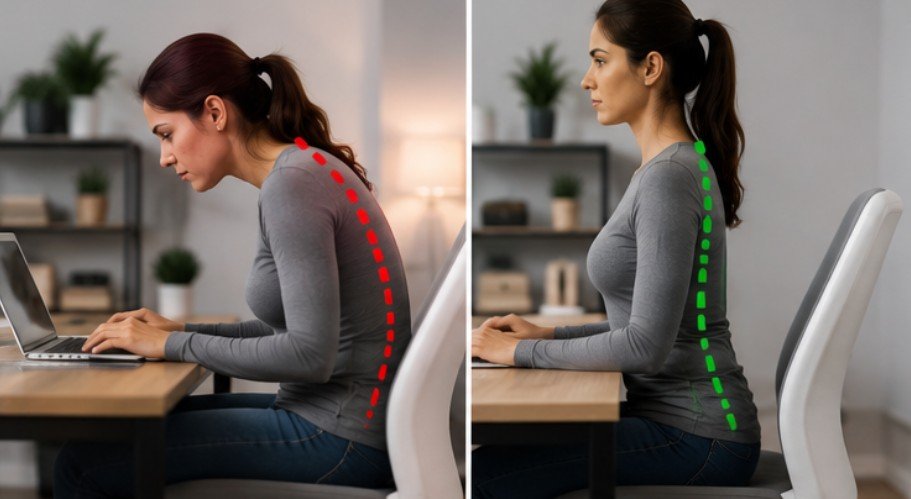
Exercise helps, but daily routines determine how often the body returns to a slumped position. Small changes during work, phone use, and rest make the plan more effective.
A gentle wall pilates workout for beginners can also support better posture by improving core control, shoulder stability, and body awareness without placing excessive strain on the joints.
Take Desk Breaks
Stand, walk, stretch, or change tasks every 30 to 60 minutes. A short break can include shoulder rolls, a chest opener, or several overhead reaches.
Use reminders until the habit becomes automatic. Even one minute reduces time spent in a fixed forward position.
Raise Your Screen
Position the computer screen near eye level and close enough to read without pushing the head forward. Keep the keyboard and mouse within easy reach.
Raise the phone toward your face instead of dropping your chin. Alternate hands and avoid holding the device low during long scrolling sessions.
Avoid Common Mistakes
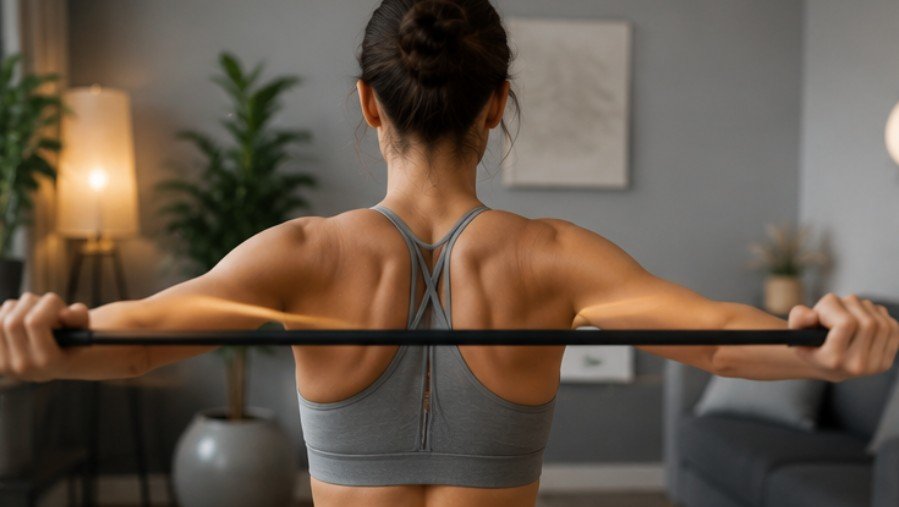
Stretching the chest without strengthening the upper back may provide temporary relief but rarely changes the whole pattern. The body needs mobility and muscular endurance.
Avoid forcing the shoulders back, using heavy bands too soon, or training through pain. Posture braces may offer reminders, but they do not build strength.
Know When to Get Help
Seek advice for persistent pain, numbness, tingling, arm weakness, breathing difficulty, recent trauma, severe headaches, or a rigid spinal curve. Major shoulder asymmetry also needs assessment.
Remember that recovery also involves respecting your physical and mental limits. Practising healthy boundaries as form of self-care can help you create sustainable exercise habits, avoid overtraining, and prioritize rest when your body needs it.
A physical therapist can evaluate mobility, strength, technique, and daily habits. Individual guidance is especially useful when symptoms continue despite several weeks of careful practice.
Frequently Asked Questions
1. Can You Actually Fix Rounded Shoulders?
Yes, flexible and habit-related rounding can often improve through stretching, strength training, spinal mobility, and better movement habits. Structural curves may not fully change, but treatment can improve comfort and function.
2. How Long Will It Take to Fix Rounded Shoulders?
Some people notice easier movement within weeks, while visible changes may take months. Progress depends on consistency, mobility, strength, sitting time, exercise technique, and the underlying cause.
3. Why Do I Unconsciously Hunch My Shoulders?
Stress, fatigue, screen habits, weak upper-back endurance, and a poor workstation can encourage hunching. Frequent movement breaks usually work better than constantly forcing the shoulders backward.
4. Can Sleeping Position Cause Rounded Shoulders?
Sleeping position alone rarely causes the problem, but an uncomfortable pillow or prolonged side position may increase stiffness. Avoid any position that causes shoulder pain, numbness, or tingling.
Stronger Shoulders, Happier Posture
Understanding how to fix rounded shoulders means looking beyond one stretch or quick cue. Open the chest, improve upper-back movement, strengthen the shoulder stabilizers, and change positions throughout the day. Practice consistently, progress slowly, and measure comfort and control. Better posture should support confident movement, not make you worry about standing perfectly.
Leave a Reply