Blog

  • Healthy Habits for People Who Work From Home: Thrive Beyond the Desk

    Healthy Habits for People Who Work From Home: Thrive Beyond the Desk

    Working remotely gave me more control over my day, but it also made unhealthy patterns easier to ignore. I could sit for hours, snack without thinking, and let work stretch into the evening. Building healthy habits for people who work from home helped me protect my energy, posture, focus, and personal time without creating an unrealistic wellness routine.

    The goal is not perfection. It is a workday built around clear boundaries, movement, planned meals, and repeatable cues.

    How Do I Build a Healthy Work-From-Home Morning Routine?

    Simulate a Commute Before You Log In

    I use part of my former commute time to walk, stretch, read, or sit outside. I also change out of my pajamas. These cues tell my brain that the workday is beginning and stop me from moving directly from bed to email.

    This short routine creates a mental transition between home life and work. It also helps me start the day intentionally instead of reacting immediately to notifications.

    Get Morning Sunlight and Eat for Steady Energy

    I step outside or sit near a bright window within an hour of waking. Morning light helps me feel alert and supports a consistent sleep-wake schedule.

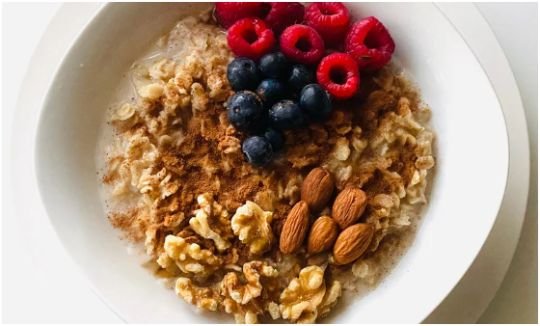
    For breakfast, I combine protein, fiber, and healthy fats. Greek yogurt, oatmeal with nuts, eggs with whole-grain toast, or cottage cheese with fruit provide steadier energy than a sugary breakfast.

    How Should I Set Work-Life Boundaries at Home?

    Clear work boundaries also make it easier to protect your evening routine and prepare your body for rest. Practicing sleep optimization habits can support better recovery, steadier energy, and stronger focus during the next remote workday.

    Create Fixed Hours and a Hard Stop

    Create Fixed Hours and a Hard Stop

    I set a firm start and finish time. At the end of the day, I update tomorrow’s priorities, log out of communication apps, close my laptop, and leave the workspace.

    This shutdown ritual replaces the separation a commute once provided and reduces the temptation to answer one more message during dinner.

    Protect a Dedicated Work Zone

    I work at a desk or table instead of my bed or couch. Keeping relaxation areas separate makes it easier to focus during office hours and unwind afterward.

    A corner of a dining table can work if I clear it when the workday ends. The goal is to create a visible boundary, not an expensive home office.

    How Can I Improve My Home Office Ergonomics?

    Align the Screen, Chair, and Keyboard

    I keep my monitor about an arm’s length away, with its top at or slightly below eye level. My elbows stay near a 90-degree angle, and I type without reaching forward.

    My thighs remain roughly parallel to the floor, while my feet rest flat or on a stable footrest. A rolled towel can support the lower back, and books can raise a laptop when paired with an external keyboard and mouse.

    Reduce Digital Eye Strain

    I use the 20-20-20 rule during long screen sessions. Every 20 minutes, I look at something approximately 20 feet away for at least 20 seconds.

    I also reduce screen glare, increase text size when necessary, and change positions regularly. Holding one supposedly perfect posture all day can still cause stiffness and discomfort.

    What Is the Best Way to Stay Active While Working From Home?

    Add Micro-Movements Throughout the Day

    Remote workers lose movement once created by commuting and walking to meetings. I replace it by standing during calls, walking after virtual meetings, doing heel raises, or stretching between tasks.

    I move for two or three minutes at least once an hour to reduce stiffness and refresh my attention. These small movement breaks are easier to maintain than relying on one long workout to offset an otherwise sedentary day.

    Schedule Purposeful Exercise

    Schedule Purposeful Exercise

    Micro-movements do not replace structured exercise. I schedule walking, cycling, jogging, strength training, or a home workout as a real appointment.

    Many American adults work toward approximately 150 minutes of moderate aerobic activity each week, along with muscle-strengthening activity on two days. I adjust that goal according to my fitness level, health needs, and schedule.

    How Can I Eat Better During a Remote Workday?

    Prepare Lunch Before Work Gets Busy

    I decide on lunch before opening my inbox. Preparing it early prevents grazing, skipped meals, and last-minute fast food when meetings run long.

    A balanced lunch may combine lean protein, vegetables, fiber-rich carbohydrates, and healthy fats. Grain bowls, bean soups, wraps, salads, and leftovers work well for a practical work-from-home routine.

    Use Hydration and Snacking Cues

    I keep a reusable water bottle in clear view and prioritize protein at breakfast and lunch to manage hunger and afternoon energy dips.

    I also use the kitchen as my designated snack zone instead of eating while typing. This rule interrupts mindless snacking. Fruit, nuts, yogurt, hummus, vegetables, and cheese are satisfying options that require little preparation.

    How Do I Protect My Mental Health While Working Remotely?

    Remote work can gradually affect confidence when isolation, constant comparison, or blurred boundaries make daily accomplishments feel less visible. Building self-care habits to improve confidence can help you recognize progress, protect your self-worth, and approach work with a healthier mindset.

    Take Breaks That Feel Like Real Breaks

    Eating lunch while reading email does not provide much recovery. I step away from my workstation and keep at least part of my lunch break screen-free.

    Between demanding meetings, I close my eyes and breathe slowly for two minutes. This micro-mindfulness habit helps me reset without requiring a long meditation session.

    Maintain Meaningful Social Contact

    Text-only communication can feel isolating, so I use phone or video calls and schedule time with friends, neighbors, or coworkers.

    Persistent fatigue, irritability, poor sleep, declining motivation, and difficulty disconnecting may signal remote work burnout. When those patterns continue, I reconsider my workload, strengthen my boundaries, and seek appropriate professional support.

    What Does a Realistic Healthy Remote Workday Look Like?

    What Does a Realistic Healthy Remote Workday Look Like?

    My minimum routine is simple. I get dressed, spend a few minutes moving or outdoors, begin work at a set time, change position each hour, eat lunch away from my desk, keep water visible, and finish with a complete shutdown ritual.

    This approach works on busy days because it does not depend on expensive equipment, perfect meals, or long workouts. Consistency makes a healthy remote work routine more sustainable than an ambitious plan that lasts only a week.

    Frequently Asked Questions 

    1. How often should remote workers take movement breaks?

    A brief change of position every 30 to 60 minutes can reduce stiffness. Walk, stretch, stand, or perform a few simple mobility exercises.

    2. How can I stop snacking all day while working remotely?

    Plan satisfying meals, include protein and fiber, keep snacks away from the desk, and eat only in a designated area such as the kitchen.

    3. How can remote workers prevent burnout?

    Set realistic work hours, reduce unnecessary notifications, take screen-free breaks, maintain social contact, protect sleep, and disconnect from work apps after hours.

    4. What are the most important healthy habits for people who work from home?

    Start with fixed work hours, hourly movement, an ergonomic workstation, planned meals, visible hydration cues, genuine breaks, regular social interaction, and a firm end-of-day routine.

    Make Your Home Office Work for Your Health

    I no longer expect remote work to automatically make me healthier. I create conditions that support better choices. When I protect my schedule, move intentionally, eat away from my computer, and close the office at a fixed time, I feel more focused during work and more present afterward.

    The best routine is not the most impressive one. It is the one I can repeat on an ordinary Tuesday. I start with one reliable cue, such as a morning walk or a hard laptop-closing time, and build from there.


  • Healthy Grocery List for One Person on a Budget: 25 Picks

    Healthy Grocery List for One Person on a Budget: 25 Picks

    Shopping for one used to leave me with two bad outcomes. I either spent too much or threw away produce before finishing it. My healthy grocery list for one person on a budget changed when I stopped buying isolated ingredients and started choosing foods with several possible uses.

    The aim is not to survive on rice and beans every day. It is to create satisfying meals from affordable proteins, durable produce and flexible pantry staples.

    Why Grocery Shopping for One Gets Expensive

    Solo shoppers cannot always benefit from family-size packages. Small packages may cost more per ounce, while large packages can create waste.

    The USDA estimates that 30% to 40% of the US food supply is wasted. Planning meals, checking food already at home and using leftovers can protect a household food budget.

    I solve this problem with a simple rule: every perishable item must work in at least three meals. Spinach can enter a smoothie, pasta dish and rice bowl. Greek yogurt can become breakfast, dip and a creamy sauce.

    That three-use rule is the main difference between a random shopping trip and a practical healthy grocery list for one person on a budget.

    My Healthy Grocery List for One Person on a Budget

    My Healthy Grocery List for One Person on a Budget

    The best list depends on dietary needs, local prices and cooking habits. However, the following foods offer a useful balance of nutrition, versatility and storage life.

    Affordable Proteins for One Person

    Eggs: Use them for breakfast, fried rice, sandwiches, salads or quick vegetable scrambles.

    Canned tuna or salmon: These shelf-stable proteins work in wraps, pasta, grain bowls and salads. Choose lower-sodium varieties when available.

    Dried or canned beans: Black beans, chickpeas and kidney beans provide plant protein and fiber. Rinse canned beans to remove some sodium.

    Lentils: Lentils cook faster than many dried beans and work in soup, curry, pasta sauce or tacos.

    Firm tofu: Tofu absorbs marinades and can be baked, scrambled or added to stir-fries.

    Plain Greek yogurt: A large container usually offers more flexibility than flavored single-serving cups. Use it with fruit, in smoothies or as a sour cream substitute.

    Chicken thighs: They often remain tender after reheating. Divide a large package into meal-sized portions and freeze the extras immediately.

    People who avoid eggs can use tofu, yogurt, beans and nut butter in High-protein breakfast ideas without eggs.

    Fresh and Frozen Produce That Lasts

    Frozen broccoli: Add it directly to pasta, soup, rice bowls or stir-fries without washing or chopping.

    Frozen spinach: Use small amounts in smoothies, eggs, lentils and pasta sauces.

    Carrots: They store well and can become snacks, roasted sides, soup ingredients or slaw.

    Onions: Onions build flavor in beans, soups, sauces and grain bowls.

    Cabbage: A single head can provide several servings and usually lasts longer than delicate salad greens.

    Sweet potatoes: Roast, microwave or cube them for bowls, tacos and breakfast hash.

    Bananas: Eat them fresh, slice them over oatmeal or freeze ripe pieces for smoothies.

    Apples or oranges: Both travel well and tend to last longer than softer fruits.

    Seasonal produce: I buy it only when I have a clear plan for using it. A low sale price does not save money when half the food enters the trash.

    Frozen vegetables are especially useful for solo households because shoppers can remove one serving and return the rest to the freezer. They also eliminate pressure to finish a large amount within several days.

    Whole Grains and Pantry Staples

    Whole Grains and Pantry Staples

    Rolled oats: Oats support breakfasts, homemade granola and simple baked snacks.

    Brown rice: Use it beneath stir-fries, beans, roasted vegetables and leftover chicken.

    Whole-wheat pasta: It provides an easy base for tuna pasta, vegetable marinara or lentil sauce.

    Whole-grain bread: Freeze half the loaf when you get home. Individual slices can go directly into the toaster.

    Natural peanut butter: Pair it with oats, toast, apples, bananas or smoothies.

    Canned tomatoes: These create a fast base for soup, chili, curry and pasta sauce.

    Low-sodium broth: Freeze unused broth in small containers if you cannot finish the package quickly.

    Flavor Builders Worth Buying

    Budget cooking becomes repetitive when every meal tastes the same. A few concentrated ingredients can change an entire dish.

    I keep garlic, soy sauce, mustard, dried herbs, chili powder and one vinegar at home. I do not buy ten specialized sauces at once. I choose seasonings that work across several cuisines and replace them only when empty.

    A One-Week Budget Grocery List

    A practical healthy grocery list for one person on a budget could contain:

    • One dozen eggs or one block of tofu
    • One package of chicken thighs
    • Two cans of tuna
    • One bag of lentils
    • One large tub of plain Greek yogurt
    • One bag each of frozen broccoli and spinach
    • Carrots, onions, cabbage and sweet potatoes
    • Bananas and one durable seasonal fruit
    • Rolled oats, brown rice and whole-wheat pasta
    • Whole-grain bread and peanut butter
    • Canned tomatoes and basic seasonings

    Prices vary widely by city, store, brand and season. Set a personal spending limit before shopping rather than copying a fixed online budget.

    The USDA Thrifty Food Plan shows how nutrient-dense foods can support meals prepared at home under a limited budget. However, it represents a model rather than a guaranteed shopping price for every household.

    How I Turn These Groceries Into Meals

    How I Turn These Groceries Into Meals

    I avoid assigning one unique recipe to every day. Instead, I build meals from four parts: protein, grain, produce and flavor.

    Breakfast might be oatmeal with banana and peanut butter. Lunch could be a tuna and cabbage sandwich. Dinner might combine brown rice, broccoli, chicken and soy sauce.

    The next day, the same ingredients can produce Greek yogurt with fruit, lentil soup and chicken tacos with cabbage slaw. This approach creates variety without requiring a new set of groceries for each recipe.

    USDA SNAP-Ed resources identify meal planning as one of the strongest ways to save money while supporting healthier meals.

    Four Rules That Keep My Grocery Bill Down

    Follow the Three-Use Rule

    Before placing fresh food in my cart, I name three realistic uses for it. If I cannot, I buy a smaller amount, choose frozen or leave it behind.

    This rule prevents aspirational shopping. I purchase food for the week I will actually have, not the perfectly organized week I imagine.

    Compare Unit Prices

    The cheapest package is not always the best value. Compare the price per ounce, pound or count on the shelf label.

    A larger container may offer a better unit price, but only when you can finish or freeze it. Waste can erase the apparent saving.

    Cook Once and Repurpose Twice

    I cook two or three servings of rice, lentils or chicken at once. I then change the vegetables, sauce or format.

    Rice can support a grain bowl on Monday and fried rice on Tuesday. Roasted vegetables can become a side dish, omelet filling or pasta addition. The USDA also recommends reusing or freezing leftovers to make more of food purchases.

    Freeze Food Before It Becomes Waste

    Do not wait until food looks tired. Freeze extra bread, cooked grains, ripe bananas and raw meat while they are still fresh.

    The FDA advises keeping refrigerators at 40°F or below and freezers at 0°F. Large portions of leftovers should be divided into shallow containers so they cool more quickly.

    Common Solo-Shopping Mistakes

    The first mistake is buying too many fresh vegetables because they appear healthier than frozen options. A mix of fresh and frozen produce usually works better for one person.

    The second is purchasing pre-cut produce. Peeled, sliced or cubed items can be convenient, but they often cost more and may have a shorter useful life.

    The third is ignoring the pantry before shopping. I now take a quick photo of my refrigerator and cupboards. It stops me from buying another bag of rice or forgetting food that needs using.

    USDA guidance also recommends organizing the refrigerator and pantry so foods that need attention remain visible.

    Finally, avoid buying a product only because it carries a health claim. Check its price, serving size, ingredients and usefulness within your actual meals.

    Frequently Asked Questions

    1. What should one person buy for a week of healthy meals?

    Choose two or three proteins, two grains, several durable vegetables, frozen produce, fruit and a few flexible flavorings.

    2. How can I make a healthy grocery list for one person on a budget?

    Plan overlapping meals, inspect your pantry, compare unit prices and choose foods that can be frozen or used at least three ways.

    3. Are frozen vegetables healthy and budget-friendly?

    Yes. Plain frozen vegetables are convenient, reduce spoilage and allow solo shoppers to cook only the amount needed.

    4. How do I avoid wasting groceries when living alone?

    Buy fewer perishables, freeze extras early, cook manageable portions and plan one weekly meal specifically for using leftovers.

    Your Grocery Cart Does Not Need a Glow-Up

    I once treated every grocery trip like a chance to reinvent my diet. That habit filled my cart with exciting ingredients but left my refrigerator with unfinished plans.

    A reliable healthy grocery list for one person on a budget should look slightly boring on paper. Its strength comes from what those ingredients can become.

    Start by choosing three proteins, three durable vegetables, two grains and two fruits. Give every perishable ingredient three jobs before checkout. Your grocery bill and trash can should both become lighter.

  • Morning Stretching Routine for Flexibility So You Feel Great 

    Morning Stretching Routine for Flexibility So You Feel Great 

    Waking up shouldn’t feel like booting up a rusty machine that takes forever to load. Pouring coffee while your lower back complains makes mornings tough. Doing a morning stretching routine for flexibility right next to your bed unlocks a smoother version of your day without needing heavy gear.

    You don’t need a lengthy workout to feel the difference. Even five to ten minutes of intentional movement can loosen tight muscles, improve circulation, and help your body transition from sleep to activity. Whether you spend your day at a desk, on your feet, or commuting, beginning with gentle mobility prepares your muscles and joints for whatever lies ahead while creating a calm, positive mindset.

    Why Morning Flexibility Matters?

    Consistency matters far more than intensity. A short stretching routine practiced every morning gradually improves flexibility, balance, and posture without placing unnecessary stress on your body. Over time, these small daily improvements can make everyday movements—such as climbing stairs, lifting groceries, or reaching overhead—feel easier and more comfortable. 

    How Overnight Immobility Tightens Muscles

    Lying still for hours in a single sleeping position causes muscles to cool down and adapt a shortened resting length. This overnight compression restricts your natural range of motion and makes simple tasks like tying your shoes feel surprisingly rigid.

    The Connection Between Joints and Daily Energy

    Stiff joints send subtle stress signals to your brain, making you feel mentally exhausted long after your alarm goes off. Gentle elongation acts as a physical wake-up call, releasing feel-good hormones and lubricating your joints for effortless daily movement.

    Why You Need This Habit Today

    Starting your morning stretching routine for flexibility keeps your body fluid and young. Instead of feeling trapped in a stiff shell, you wake up your nervous system, boost blood flow, and dodge those annoying midday aches with zero fuss.

    Tips Before You Begin Your Morning Stretching Routine

    Before starting your stretches, give your body a moment to wake up naturally. Take several slow, deep breaths and avoid jumping immediately into aggressive movements. Since your muscles are cooler after sleeping, gentle, controlled motions are much safer and more effective than bouncing or forcing deeper stretches.

    Wear comfortable clothing that allows unrestricted movement, and perform your routine on a yoga mat or another supportive surface. Focus on breathing steadily throughout every exercise because controlled breathing helps muscles relax and improves flexibility. If a stretch causes sharp pain instead of mild tension, reduce the range of motion or stop altogether. The goal is to wake up your body—not push it to its limits.

    Most importantly, listen to your body each morning. Some days you may feel looser than others, and adjusting your routine accordingly helps build a sustainable habit.

    Stretching should support your energy rather than become another demanding task on your schedule. Understanding how balancing work and recovery helps stay productive can encourage you to combine movement with adequate rest, helping your body remain active without becoming physically or mentally drained.

    Spine and Core Waking

    Spine and Core Waking

    Cat-Cow Spine Awakening

    Begin your session on your hands and knees in a comfortable tabletop position on a soft mat. Inhale deeply as you drop your belly toward the floor and look up gently toward the ceiling. Exhale completely as you round your spine upward toward the sky, tucking your chin and repeating this fluid motion for ten smooth repetitions.

    Move slowly with your breathing rather than rushing through the repetitions. This exercise gently mobilizes every segment of your spine while encouraging better posture throughout the day.

    Thread the Needle

    If your shoulders feel especially tight, pause for an extra breath before switching sides. The stretch can also relieve tension caused by prolonged computer or smartphone use.

    Tight hip flexors are especially common among people who sit for long periods. Stretching them regularly helps improve walking mechanics and reduces unnecessary strain on the lower back.

    Lumbar Rotation for Back Release

    Lie flat on your back with your knees bent and your feet planted firmly on the floor. Gently drop both knees together from one side to the other in a slow windshield wiper motion for sixty seconds. This simple movement releases lower back tension and preps your core for the day ahead.

    If your shoulders feel especially tight, pause for an extra breath before switching sides. The stretch can also relieve tension caused by prolonged computer or smartphone use.

    Lower Body and Hips

    Lower Body and Hips

    Hip Flexor Lunge Stretch

    Step one foot forward into a comfortable low lunge while keeping your back knee resting on the floor. Press your hips forward gently while keeping your chest lifted high to stretch the front of your hip for thirty seconds. Switch sides carefully to ensure balanced mobility through your lower half.

    Half-Kneeling Hamstring Stretch

    Shift your weight backward smoothly from your low lunge position until your front leg straightens out completely. Point your toes upward toward the ceiling and hinge forward gently from your hips for thirty seconds per side. This stretch targets tight hamstrings and improves overall leg flexibility.

    Upper Body and Final Release

    Upper Body and Final Release

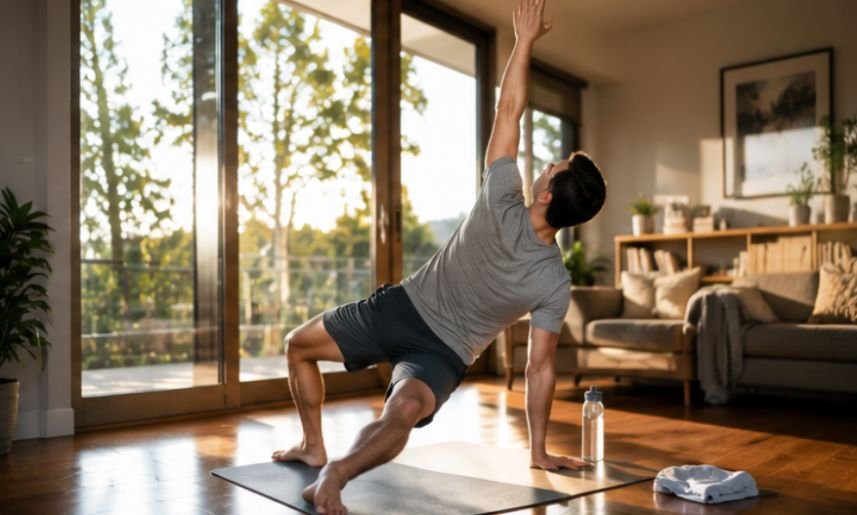
    Morning mobility is also a useful opportunity to address posture habits that build up during desk work, driving, or frequent phone use. Learning how to fix rounded shoulders can help you combine chest-opening stretches with upper-back strengthening for better shoulder alignment and more comfortable movement.

    Thread the Needle Upper Back Relief

    Return to your hands and knees and slide one arm underneath your chest to reach across the floor. Allow your shoulder and the side of your head to lower gently toward the mat for twenty seconds per side. This targets your upper back and shoulder blades to melt away desk posture tension.

    Child’s Pose Final Release

    Push your hips all the way back onto your heels while extending your arms far forward on the floor. Rest your forehead comfortably on your mat and take five deep, slow breaths to finish your session. This calming posture signals to your nervous system that you are centered and ready for the day.

    Frequently Asked Questions

    1. Is it good to stretch as soon as I wake up?

    Yes, gentle stretching wakes up your nervous system, improves blood circulation, and releases overnight muscle tension, provided you move slowly and avoid forcing cold joints into deep ranges.

    2. What is the 5-5-5-30 morning workout routine?

    It is a structured fitness trend featuring intervals of core, upper body, and lower body movements, though dedicated flexibility routines focus primarily on mobility rather than intense conditioning.

    3. Does stretching help morning stiffness?

    Targeted mobility work increases synovial fluid production in your joints, which directly lubricates them and reduces that stiff, groggy feeling after sleeping.

    4. Is stretching a good morning routine?

    It is one of the best habits to build because it requires zero equipment, takes under ten minutes, and sets a calm, healthy tone for the entire day.

    Stretch Into Greatness Today

    Embracing a consistent morning stretching routine for flexibility bridges the gap between groggy sleep and vibrant daily energy. Spending just a few minutes unlocking your joints transforms how you move, feel, and conquer your daily tasks with absolute ease.

  • Loosen Up With These Stretches for Lower Back Stiffness

    Loosen Up With These Stretches for Lower Back Stiffness

    A stiff lower back can make standing up, tying your shoes, or reaching for a cupboard feel harder than expected. My go-to approach is not aggressive bending. It is a controlled routine of stretches for lower back stiffness that restores movement, relaxes tight muscles, and helps the body feel more comfortable during activity.

    Key Takeaways

    • Gentle movement works better than forcing a deep stretch.
    • Hold most positions for 20 to 30 seconds.
    • Stretch the hips, glutes, and hamstrings too.
    • Use slow breathing to reduce muscle tension.
    • Stop if pain feels sharp, spreading, or worse.

    Why This Routine Beneficial?

    A stiff back can make even picking up a sock feel dramatic. That is why stretches for lower back stiffness matter. They may improve mobility, reduce muscle guarding, and make daily movement feel less restricted. The goal is not extreme flexibility but also to inculcate self care habits. It is easier movement, better control, and less hesitation.

    Why Your Lower Back Feels Tight

    Lower-back stiffness rarely comes from one muscle. Long sitting, hard workouts, awkward sleep positions, limited hip mobility, and reduced activity can all contribute. The lumbar area may tighten because nearby muscles are not sharing movement well.

    Sitting Limits Natural Motion

    Hours at a desk keep the hips bent and the spine in one position. The hip flexors may tighten, the glutes may become less active, and the lower back may compensate.

    Stand every 30 to 60 minutes and walk briefly. Small movement breaks are easier to maintain than one long evening session.

    Tight Hips Affect The Back

    The hips, glutes, and hamstrings control the pelvis during walking, bending, and lifting. When these areas feel restricted, the lower back may move more than it should.

    A balanced routine should include hip flexor, glute, and hamstring stretches. This often feels more useful than repeatedly pulling on the lower back alone.

    Morning Stiffness Needs Patience

    Your back may feel less mobile after hours of sleep. Jumping into a deep forward bend can feel uncomfortable, so begin with small movements. Pelvic tilt exercises, knee rolls, and a short walk are useful first steps.

    Prepare Before Stretching

    Simple checks make the routine safer. Stretching should create mild tension, not pain or pressure.

    Prepare Before Stretching

    Use A Comfortable Range

    Keep every movement within a range where you can breathe normally. Aim for gentle pulling at around two or three out of ten in intensity.

    Move slowly. Avoid bouncing, jerking, or holding your breath because these habits may increase muscle guarding.

    Watch For Warning Signs

    Stop and seek medical advice for severe pain, leg weakness, groin numbness, bowel or bladder changes, fever, unexplained weight loss, or pain after a serious fall.

    Radiating pain, tingling, or worsening symptoms also need professional assessment.

    How To Do Stretches for Lower Back Stiffness

    These movements follow a sequence, starting with gentle spinal motion before longer hip and leg stretches. Use a mat, move slowly, and rest whenever needed.

    Knee-To-Chest Stretch

    Lie on your back with your knees bent and feet flat. Bring one knee toward your chest while holding behind the thigh or over the shin.

    Hold for five seconds, release, and switch sides. Repeat two or three times per leg. Bring both knees inward only if comfortable.

    Child’s Pose

    Kneel with your big toes close together and knees comfortably apart. Sit your hips toward your heels while reaching your arms forward.

    Hold for 20 to 30 seconds and breathe into your ribs. Use a cushion if needed, and skip the position if kneeling hurts.

    Cat-Cow Stretch

    Begin on your hands and knees. Exhale as you round your back toward the ceiling and tuck your chin. Inhale as you soften your stomach and lift your chest.

    Repeat eight to ten times smoothly. Keep the range comfortable and avoid dropping heavily into the lower back during Cow.

    Lower Back Rotational Stretch

    Lie on your back with your knees bent and feet flat. Keep your shoulders on the floor and slowly let both knees move toward one side.

    Hold for 10 to 20 seconds, return to the center, and switch sides. Use a pillow under the knees if needed.

    Figure-Four Glute Stretch

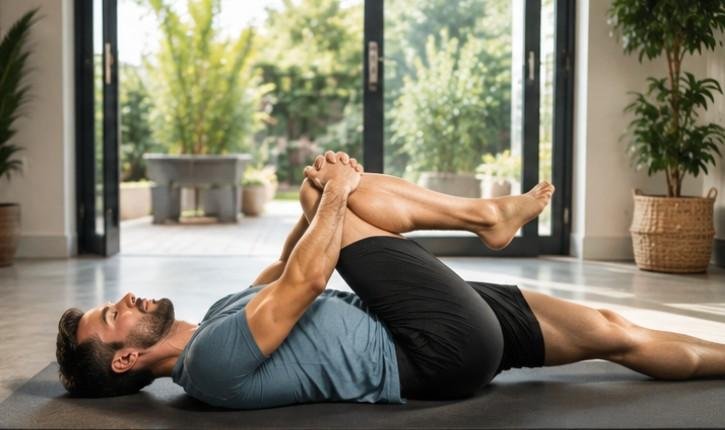
    Lie on your back and cross one ankle over the opposite thigh. Hold behind the supporting thigh and draw the leg toward you.

    Hold for 20 to 30 seconds before changing sides. Keep the crossed foot flexed and stop if the position causes knee pain or discomfort.

    Hip Flexor Stretch

    Kneel with one foot forward and padding beneath the back knee. Stand tall, tighten the glute on the kneeling side, and shift forward slightly.

    Hold for 20 seconds, then switch sides. Avoid arching the lower back. You should feel the stretch at the front of the hip.

    Supported Hamstring Stretch

    Supported Hamstring Stretch

    Lie on your back and loop a towel around one foot. Lift that leg while keeping the knee slightly bent.

    Hold for 20 seconds per side. Do not pull the leg as high as possible. Keeping the lower back relaxed matters more than straightening the knee.

    Build A Ten-Minute Routine

    Start with one minute of walking, followed by pelvic tilts and knee rolls. Continue with knee-to-chest, Cat-Cow, and Child’s Pose. Finish with the figure-four, hip flexor, and hamstring stretches.

    Use these stretches for lower back stiffness once daily or after long sitting. Consistency matters more than intensity, so choose a routine you can repeat comfortably.

    Match It To Your Day

    For morning stiffness, focus on pelvic tilts, knee rolls, and Cat-Cow. After desk work, prioritize walking, hip flexor stretching, and gentle rotation.

    After training, stretch the glutes and hamstrings gently. Choose movements that improve comfort without increasing symptoms.

    Support Mobility With Strength

    Stretching may ease temporary tightness, but strength helps the body manage movement. Add bridges, bird dogs, and bodyweight squats on separate days once comfortable.

    Walking, position changes, and resistance training make mobility more useful. The goal is a back that feels capable, not simply flexible.

    Frequently Asked Questions

    1. How Do I Loosen A Stiff Lower Back?

    Begin with stretches for lower back stiffness such as pelvic tilts, knee rolls, knee-to-chest movements, and Cat-Cow. Move gently, breathe slowly, and repeat consistently instead of forcing a deeper range.

    2. How To Decompress A Tight Lower Back?

    Lie on your back with your calves supported on a chair and breathe slowly for several minutes. This may relax surrounding muscles, but avoid forceful hanging or traction without professional guidance.

    3. What Causes Extreme Tightness In The Lower Back?

    Extreme tightness may result from prolonged sitting, muscle guarding, overtraining, limited hip mobility, strain, joint irritation, or nerve-related issues. Severe or persistent symptoms need professional assessment.

    4. Why Is My Back So Inflexible?

    Back inflexibility can come from inactivity, repeated postures, tight hips or legs, fear of movement, previous injury, or natural anatomy. Gradual mobility and strength work may improve movement over time.

    Loosen Up And Move On

    The best stretches for lower back stiffness are gentle, repeatable, and practical. Start with small spinal movements, include the hips and glutes, and avoid chasing extreme flexibility. A calm ten-minute routine can improve comfort and confidence, but worsening pain, unusual symptoms, or lasting stiffness should be discussed with a healthcare professional.

  • Wondering How To Fix Rounded Shoulders? Try 10 Min Routine

    Wondering How To Fix Rounded Shoulders? Try 10 Min Routine

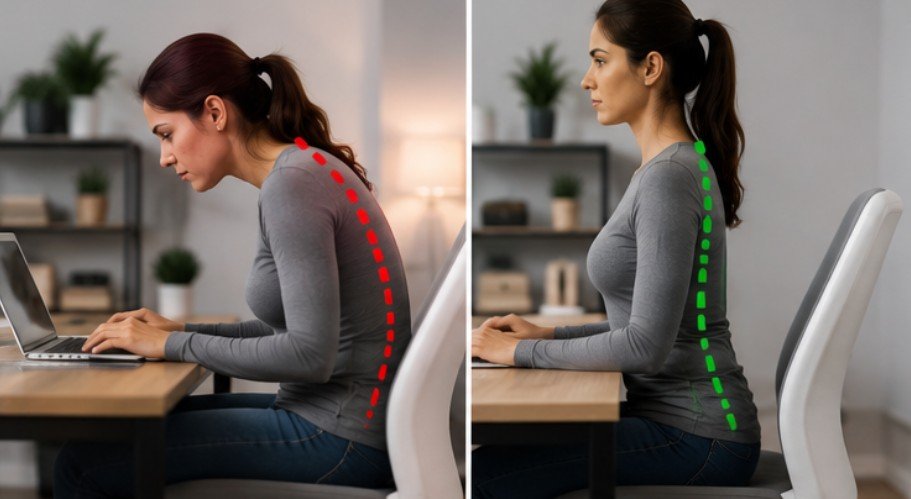
    Long hours at a laptop can make the chest tight and the upper back tired. That forward slump often appears slowly, so it is easy to ignore until shirts hang differently or shoulder movement feels restricted. Learning how to fix rounded shoulders starts with small, consistent changes rather than forcing the body into an uncomfortable pose.

    Here is why learning how to fix rounded shoulders deserves attention before the slump becomes your unofficial signature pose. Forward shoulder positioning can make overhead reaching, pressing, pulling, and deep breathing feel less comfortable, especially after long periods of sitting.

    What Rounded Shoulders Mean?

    Rounded shoulders describe a resting position where the shoulders sit forward, the upper arms rotate inward, and the shoulder blades spread apart. The head may also drift forward during phone use, desk work, driving, gaming, or reading.

    This position can be flexible and habit related, but it may also reflect pain, injury, spinal shape, or limited shoulder movement. A mirror check can offer clues, but it cannot diagnose the cause. Persistent discomfort or major asymmetry needs professional assessment.

    Tight Areas

    The chest muscles often become stiff after prolonged sitting or repeated pressing exercises. The front of the shoulders may also feel restricted, making it harder to raise the arms smoothly without arching the lower back.

    Weak Areas

    The rhomboids, lower trapezius, rear shoulders, and rotator cuff help control the shoulder blades. These muscles may not be truly weak, but they can lack endurance after hours of sitting.

    Check Your Starting Point

    Stand naturally before a mirror with your arms relaxed. Notice whether your palms face backward, your thumbs turn inward, or one shoulder sits higher. Next, raise both arms overhead while keeping the ribs relaxed.

    Watch for lower-back arching, shoulder pinching, or difficulty bringing the arms beside the ears. Repeat after gently lengthening your upper back. Easier movement may suggest that posture and thoracic mobility influence your range.

    Record your starting range and repeat the checks monthly, using comfort and control as progress markers rather than appearance.

    How to Fix Rounded Shoulders Step by Step

    How to Fix Rounded Shoulders Step by Step

    The best method combines mobility, stretching, strengthening, and posture practice. Complete this sequence three to five times weekly. Move slowly, breathe normally, and stop any exercise that causes sharp pain, tingling, numbness, or worsening discomfort.

    Open the Upper Back

    Sit on a sturdy chair with the backrest touching the middle of your upper back. Support your head lightly, lean backward over the chair, then return slowly.

    Complete six repetitions without forcing the neck or flaring the ribs. This thoracic extension drill helps the shoulders reach overhead with less compensation.

    Do the Doorway Stretch

    Bend your elbows to 90 degrees and place your forearms against a doorway. Step forward until you feel a gentle chest stretch. Keep the shoulders relaxed.

    Hold for 15 to 30 seconds and repeat three times. Adjust elbow height for comfort. Mild tension is enough because aggressive stretching may irritate the shoulder.

    Try the Chest Opener

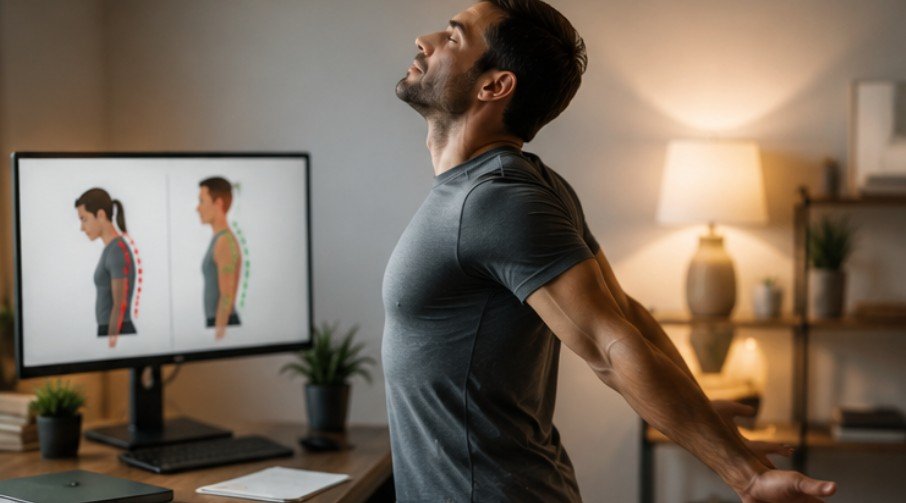
    Stand tall and place loose fists against your lower back. Move the elbows gently backward and slightly upward while keeping the ribs down and chin level.

    Hold for 15 seconds and repeat three times. Avoid forcing the shoulders downward. This quick stretch works well during desk breaks.

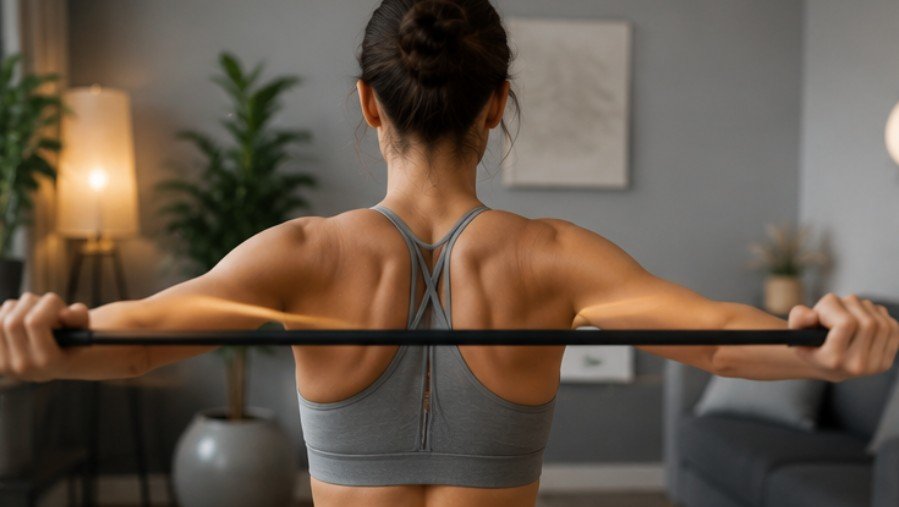
    Perform Wall Angels

    Stand with your back and head near a wall, feet slightly forward, and arms in a goalpost shape. Slide the arms upward while keeping the ribs controlled and shoulders relaxed.

    Complete three sets of 10 repetitions. Your hands do not need to stay against the wall. Use a pain-free range without shrugging or arching.

    Practice Scapular Retraction

    Sit or stand tall. Draw the shoulder blades gently back and down, as though holding a pencil between them. Keep the neck loose.

    Hold for five seconds and repeat 10 times. The squeeze should feel controlled, not aggressive. Do not maintain this position all day.

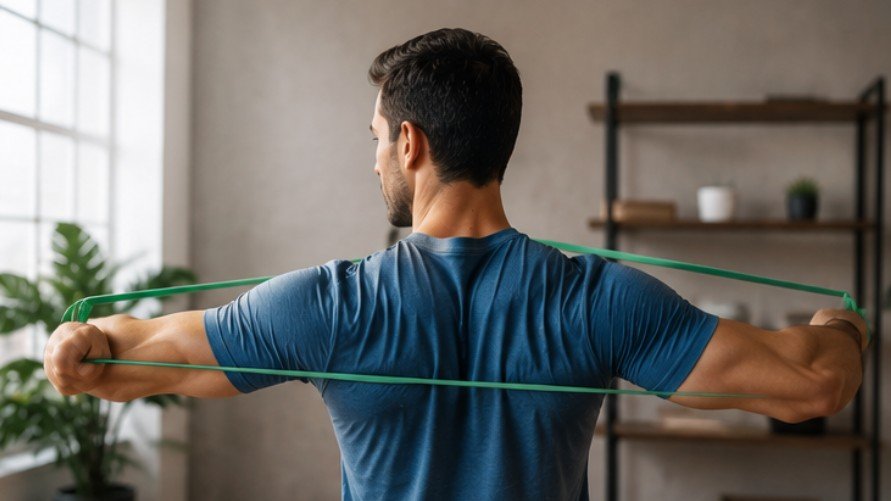
    Add Band Pull-Aparts

    Hold a light resistance band at chest height. Pull it apart until the arms open comfortably, then return slowly. Keep the shoulders low and ribs stacked.

    Perform two sets of 10 to 12 repetitions. Start light because excessive resistance often causes shrugging and poor form.

    Improve Daily Habits

    Improve Daily Habits

    Exercise helps, but daily routines determine how often the body returns to a slumped position. Small changes during work, phone use, and rest make the plan more effective.

    A gentle wall pilates workout for beginners can also support better posture by improving core control, shoulder stability, and body awareness without placing excessive strain on the joints.

    Take Desk Breaks

    Stand, walk, stretch, or change tasks every 30 to 60 minutes. A short break can include shoulder rolls, a chest opener, or several overhead reaches.

    Use reminders until the habit becomes automatic. Even one minute reduces time spent in a fixed forward position.

    Raise Your Screen

    Position the computer screen near eye level and close enough to read without pushing the head forward. Keep the keyboard and mouse within easy reach.

    Raise the phone toward your face instead of dropping your chin. Alternate hands and avoid holding the device low during long scrolling sessions.

    Avoid Common Mistakes

    Avoid Common Mistakes

    Stretching the chest without strengthening the upper back may provide temporary relief but rarely changes the whole pattern. The body needs mobility and muscular endurance.

    Avoid forcing the shoulders back, using heavy bands too soon, or training through pain. Posture braces may offer reminders, but they do not build strength.

    Know When to Get Help

    Seek advice for persistent pain, numbness, tingling, arm weakness, breathing difficulty, recent trauma, severe headaches, or a rigid spinal curve. Major shoulder asymmetry also needs assessment.

    Remember that recovery also involves respecting your physical and mental limits. Practising healthy boundaries as form of self-care can help you create sustainable exercise habits, avoid overtraining, and prioritize rest when your body needs it.

    A physical therapist can evaluate mobility, strength, technique, and daily habits. Individual guidance is especially useful when symptoms continue despite several weeks of careful practice.

    Frequently Asked Questions

    1. Can You Actually Fix Rounded Shoulders?

    Yes, flexible and habit-related rounding can often improve through stretching, strength training, spinal mobility, and better movement habits. Structural curves may not fully change, but treatment can improve comfort and function.

    2. How Long Will It Take to Fix Rounded Shoulders?

    Some people notice easier movement within weeks, while visible changes may take months. Progress depends on consistency, mobility, strength, sitting time, exercise technique, and the underlying cause.

    3. Why Do I Unconsciously Hunch My Shoulders?

    Stress, fatigue, screen habits, weak upper-back endurance, and a poor workstation can encourage hunching. Frequent movement breaks usually work better than constantly forcing the shoulders backward.

    4. Can Sleeping Position Cause Rounded Shoulders?

    Sleeping position alone rarely causes the problem, but an uncomfortable pillow or prolonged side position may increase stiffness. Avoid any position that causes shoulder pain, numbness, or tingling.

    Stronger Shoulders, Happier Posture

    Understanding how to fix rounded shoulders means looking beyond one stretch or quick cue. Open the chest, improve upper-back movement, strengthen the shoulder stabilizers, and change positions throughout the day. Practice consistently, progress slowly, and measure comfort and control. Better posture should support confident movement, not make you worry about standing perfectly.

  • High-Protein Breakfast Ideas Without Eggs

    High-Protein Breakfast Ideas Without Eggs

    I used to believe that a filling breakfast needed eggs. Once I started rotating yogurt, cottage cheese, tofu, beans and soy milk, my mornings became far less repetitive.

    These high-protein breakfast ideas without eggs deliver satisfying meals without relying on complicated recipes. Most provide roughly 15 to 30 grams of protein and take less than 15 minutes to prepare.

    The current Dietary Guidelines for Americans encourage people to choose varied, nutrient-dense protein sources. Suitable choices include dairy, beans, lentils, nuts, seeds, tofu and tempeh.

    How Much Protein Should Breakfast Contain?

    There is no universal breakfast target because protein needs depend on age, body size, activity and health goals. However, I find that building breakfast around a meaningful protein source works better than adding a small protein garnish.

    Studies examining breakfasts containing about 30 grams of protein found greater fullness than lower-protein meals. One trial also reported lower hunger ratings after breakfasts containing 30 or 39 grams. However, greater fullness does not guarantee weight loss or improved health by itself.

    You do not need to reach 30 grams at every breakfast. A practical starting range is 15 to 25 grams, followed by adjustments based on hunger, activity and total daily intake.

    No-Cook High-Protein Breakfast Ideas Without Eggs

    No-Cook High-Protein Breakfast Ideas Without Eggs

    These options work well when I have little time or do not want to wash a skillet.

    Greek Yogurt Parfait

    Combine one cup of plain Greek yogurt with berries, chia seeds and hemp hearts. Depending on the yogurt and portions, the bowl may provide approximately 20 to 25 grams of protein.

    I use plain yogurt because flavored varieties can contain considerable added sugar. Cinnamon, vanilla extract or ripe fruit adds sweetness without turning breakfast into dessert.

    Savory Cottage Cheese Bowl

    Place cottage cheese in a bowl and add cucumber, tomatoes, cracked pepper and everything bagel seasoning. A one-cup serving can supply approximately 25 grams of protein, although brands differ.

    For more fiber, add chickpeas or serve the bowl with whole-grain toast. Choose a lower-sodium cottage cheese when sodium is a concern.

    Protein Chia Pudding

    Stir chia seeds into dairy or fortified soy milk. Add Greek yogurt or a small amount of protein powder, then refrigerate overnight.

    Chia alone is not usually enough to create a genuinely high-protein breakfast. Combining it with soy milk and yogurt can raise the meal toward 18 to 25 grams while adding soluble fiber.

    Warm Egg-Free Breakfasts With Protein

    Warm Egg-Free Breakfasts With Protein

    The best high-protein breakfast ideas without eggs should include savory choices. These meals offer more variety than sweet oats and smoothies.

    Turmeric Tofu Scramble

    Crumble firm tofu into a warm skillet with turmeric, nutritional yeast, spinach and black pepper. Black salt can create a mild egg-like flavor, but regular salt also works.

    A generous tofu portion may provide about 18 to 22 grams of protein. I press the tofu first because removing excess water helps it brown instead of steam.

    Cheesy Bean and Avocado Toast

    Mash black beans or cannellini beans over sprouted whole-grain toast. Add a slice of cheese and warm it until melted. Finish with avocado, salsa or red pepper flakes.

    This breakfast may deliver 15 to 20 grams of protein, depending on the bread, beans and cheese. Beans also contribute fiber, which helps turn toast into a more complete meal.

    Smoked Salmon and Cottage Cheese Toast

    Spread cottage cheese over whole-grain toast or half a bagel. Top it with smoked salmon, capers, dill and sliced cucumber.

    This combination can provide roughly 22 to 26 grams of protein. Smoked salmon can be high in sodium, so I balance it with fresh vegetables and avoid adding extra salt.

    Smoothies and Overnight Oats

    Liquid breakfasts can feel unsatisfying when they contain mostly fruit and juice. These high-protein breakfast ideas without eggs use milk, yogurt, seeds or protein powder as the foundation.

    Peanut Butter Overnight Oats

    Mix rolled oats with milk, Greek yogurt, chia seeds and natural peanut butter. Refrigerate the mixture overnight and loosen it with milk before eating.

    My reliable combination uses equal parts oats and yogurt, plus enough milk to soften the oats. It often reaches about 20 to 25 grams of protein without protein powder.

    Peanut butter contributes protein, but it is primarily a source of fat. Yogurt or soy milk does most of the protein work.

    Avocado and Hemp Smoothie

    Blend fortified soy milk, spinach, half an avocado, hemp hearts and a protein powder you tolerate. Frozen fruit can improve the flavor and texture.

    Depending on the powder, this smoothie may provide 25 to 30 grams of protein. USDA FoodData Central is useful for checking product-specific values because protein levels vary across brands and serving sizes.

    My Three-Part Breakfast Formula

    My Three-Part Breakfast Formula

    Recipe lists help, but a repeatable system makes breakfast easier. I use three parts:

    1. Choose a protein anchor. Start with Greek yogurt, cottage cheese, tofu, beans, salmon or fortified soy milk. Aim for that ingredient to provide most of the meal’s protein.
    2. Add a fiber partner. Use berries, oats, whole-grain bread, beans, chia seeds, vegetables or fruit. This approach also helps you build a balanced meal with protein and fiber rather than focusing on one nutrient.
    3. Add a flavor booster. Choose cinnamon, herbs, salsa, cocoa, capers, nut butter or seasoning. Flavor variety makes meal preparation sustainable.

    This formula is the original element I rely on most. It turns available groceries into breakfast without requiring a fixed recipe.

    For example, cottage cheese acts as the protein anchor, berries and chia provide fiber, and cinnamon adds flavor. The same formula works with tofu, spinach and salsa.

    Five-Day Egg-Free Breakfast Plan

    Here is how I would rotate high-protein breakfast ideas without eggs without buying completely different ingredients each day.

    Monday: Greek yogurt, berries, chia seeds and hemp hearts
    Tuesday: Tofu scramble with spinach and whole-grain toast
    Wednesday: Peanut butter overnight oats with Greek yogurt
    Thursday: Cottage cheese, tomatoes, cucumber and chickpeas
    Friday: Smoked salmon and cottage cheese toast

    This plan reuses yogurt, cottage cheese, seeds, greens and bread. Repeating ingredients lowers food waste while keeping the finished meals different.

    Common Protein Breakfast Mistakes

    The first mistake is assuming a tablespoon of peanut butter makes oatmeal high in protein. It adds some protein, but yogurt, soy milk or cottage cheese will usually make a larger difference.

    The second mistake is removing carbohydrates completely. Whole grains, beans, fruit and vegetables can contribute fiber, micronutrients and useful energy.

    The third mistake is trusting recipe estimates without checking labels. A serving of Greek yogurt might contain anywhere from modest to substantial protein. Bread, tofu and plant milks also vary.

    Finally, protein does not need to come from a supplement. The Dietary Guidelines recognize dairy, legumes, nuts, seeds, tofu and tempeh as protein-rich options.

    Frequently Asked Questions

    1. What are easy high-protein breakfast ideas without eggs or dairy?

    Try tofu scramble, bean toast, soy yogurt, overnight oats made with soy milk, or a smoothie containing tofu, hemp hearts and plant protein.

    2. Can I make a high-protein breakfast without protein powder?

    Yes. Greek yogurt, cottage cheese, tofu, beans, salmon and soy milk can create a protein-rich breakfast without powders.

    3. Which vegetarian breakfast has the most protein without eggs?

    A tofu scramble served with beans or whole-grain toast can provide more than 20 grams, depending on the portions used.

    4. Are high-protein breakfast ideas without eggs good for meal prep?

    Yes. Chia pudding, overnight oats, tofu scramble and yogurt bowls can be prepared or portioned ahead for busy mornings.

    Your Breakfast Does Not Need an Egg

    I no longer treat eggs as the default answer to every protein problem. A stocked refrigerator containing yogurt, tofu, beans or soy milk gives me far more flexibility.

    Choose one of these high-protein breakfast ideas without eggs and prepare it before tomorrow morning. Start with the easiest option, then adjust the portion until it keeps you comfortably satisfied.

  • How Sleep Optimization Habits Can Improve Your Daily Energy

    How Sleep Optimization Habits Can Improve Your Daily Energy

    For a long time, I thought getting seven or eight hours of sleep automatically meant I’d wake up feeling refreshed. Some mornings proved me wrong. I’d get what looked like enough rest, yet I’d still feel sluggish before lunch and struggle to stay focused through the afternoon. It made me realize that the number of hours wasn’t the whole story.

    Once I started paying attention to how I slept instead of simply how long I slept, things gradually changed. A few small adjustments to my routine made mornings feel less exhausting and helped me stay energized throughout the day. That’s what sleep optimization habits are really about. They help your body recover more efficiently so you can get more out of every day.

    Why Sleep Quality Matters More Than Sleep Quantity

    Why Sleep Quality Matters More Than Sleep Quantity

    Getting enough sleep is important, but quality sleep is what allows your body to recover properly. During deep sleep, your muscles repair themselves, your brain organizes memories, and your body produces more ATP, the molecule that supplies energy to your cells. This is also when your internal body clock resets for the next day.

    When deep sleep is interrupted night after night, waking up tired becomes common even if you’ve technically spent enough hours in bed. That’s why improving sleep quality often has a greater impact on daily energy than simply extending your bedtime.

    Keep Your Body Clock Consistent

    One of the most effective sleep optimization habits is maintaining a regular sleep schedule. Going to bed and waking up at the same time every day helps strengthen your circadian rhythm, which is your body’s natural sleep and wake cycle.

    Sleeping in for several extra hours on weekends might feel rewarding, but it can make Monday mornings much harder. A consistent routine teaches your body when to feel sleepy and when to feel alert, making it easier to fall asleep naturally and wake up feeling rested.

    Let Natural Light Do Some of the Work

    Let Natural Light Do Some of the Work

    Morning sunlight plays a much bigger role than many people realize. Exposure to natural light shortly after waking tells your brain that the day has started, helping regulate hormones that influence alertness and nighttime melatonin production.

    Even spending 15 to 30 minutes outside during the morning can help keep your body clock aligned. Many people notice improved focus and steadier energy simply by getting outside before diving into emails or scrolling through their phones.

    Move During the Day for Better Recovery at Night

    Exercise benefits more than your heart and muscles. Regular movement helps improve sleep efficiency, allowing your body to spend more time in the restorative stages of sleep.

    That doesn’t mean every workout needs to be intense. Walking, cycling, swimming, or strength training can all contribute to better sleep. The key is giving your body enough time to cool down before bedtime, since vigorous exercise too late in the evening may delay sleep for some people.

    Be Smarter About Caffeine and Evening Meals

    Be Smarter About Caffeine and Evening Meals

    Coffee can improve concentration during the day, but caffeine stays in the body longer than many people expect. Drinking coffee or caffeinated soda late in the afternoon may make it harder to fall asleep, even if you don’t immediately notice the effects.

    Food choices matter too. Heavy meals, sugary desserts, and excessive alcohol close to bedtime can interrupt deep sleep and leave you feeling less refreshed the next morning. A lighter evening meal gives your body more opportunity to focus on recovery instead of digestion.

    Create a Bedroom That Supports Sleep

    Your bedroom should encourage rest instead of distraction. A cool, dark, and quiet environment helps your brain recognize that it’s time to sleep.

    Limiting screen time during the hour before bed is another simple habit that pays off. Blue light from phones, tablets, and televisions can delay melatonin production, making it more difficult to fall asleep. Reading a book, listening to calming music, or practicing gentle breathing exercises creates a smoother transition into sleep.

    Stop Chasing Perfect Sleep

    Stop Chasing Perfect Sleep

    One restless night doesn’t undo weeks of healthy habits. Many people become anxious after a poor night’s sleep, which only makes it harder to relax the following evening.

    Instead of aiming for perfect sleep every night, focus on consistency. A steady bedtime, regular movement, healthy nutrition, and a calming nighttime routine work together over time. These habits support recovery without adding unnecessary pressure to your daily life.

    FAQs: How Sleep Optimization Habits Can Improve Your Daily Energy

    1. What are sleep optimization habits?
    Sleep optimization habits are everyday behaviors that improve sleep quality, such as keeping a regular bedtime, limiting caffeine, reducing screen time before bed, and creating a comfortable sleep environment.

    2. How long does it take to notice better energy?
    Many people notice improvements within one or two weeks of following consistent sleep habits. Better recovery builds gradually, so sticking with the routine is more important than expecting overnight results.

    3. Can exercise really improve sleep?
    Yes. Regular physical activity helps your body spend more time in restorative sleep stages. Finishing workouts a few hours before bedtime may also make it easier to fall asleep.

    4. Do I need a sleep tracker to optimize my sleep?
    Not necessarily. Wearable devices can provide useful information, but consistent habits like a regular schedule, morning sunlight, and a relaxing bedtime routine often have a much greater impact.

    Better Days Usually Begin the Night Before

    The biggest lesson behind sleep optimization habits is that lasting energy rarely comes from one dramatic change. It grows from small routines that support your body’s natural recovery process every single day. A consistent bedtime, better light exposure, regular movement, and a relaxing evening routine may seem simple on their own, but together they create the foundation for better focus, steadier energy, and improved well-being.

    When your nights improve, your days usually follow.

  • Mastering The Wall Pilates Workout For Beginners At Home

    Mastering The Wall Pilates Workout For Beginners At Home

    Finding a fitness routine that feels both gentle on your joints and deeply effective can sometimes feel like chasing a dream. Juggling hectic daily schedules often leaves zero time for expensive studio classes or heavy gym equipment. 

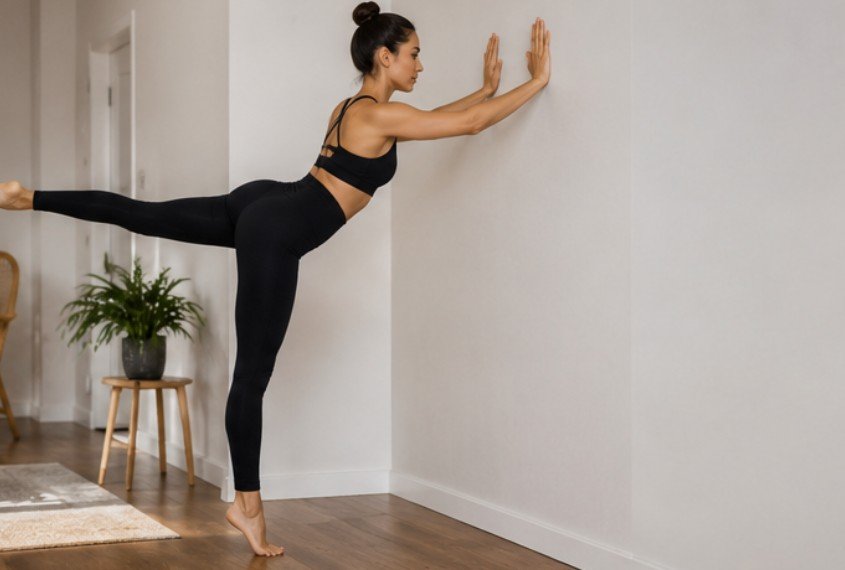
    That is precisely why a wall pilates workout for beginners has become the ultimate game changer for people wanting to move their bodies without any intimidation. This friendly vertical surface acts like a personal assistant for proper alignment, helping you build core strength right from your living room floor.

    Key Takeaways

    • Low-impact routine using vertical stability.
    • Targets deep core muscles safely.
    • Zero expensive studio equipment needed.
    • Enhances joint flexibility and posture.
    • Perfect for absolute home fitness beginners.

    Why Your Daily Routine Needs This Movement

    Saying goodbye to boring workout regimens is easy when your living room wall can double as a personal gym. Diving into a wall pilates workout for beginners brings pure magic to your physical wellness journey because it provides instant tactile feedback and gentle resistance. You get all the incredible toning benefits without needing a single piece of fancy gear.

    Regular exercise works best when it is supported by balanced nutrition and realistic daily habits. Following a seven-day healthy eating meal plan for beginners can help you organize nourishing meals that complement your movement routine and support steady energy throughout the week.

    Reduce Joint Stress

    Protecting your joints while building strength should always be a top priority for anyone starting a new active lifestyle. Traditional floor exercises can sometimes place awkward pressure on your wrists or lower back. Leaning against a stable flat surface distributes your body weight evenly so every repetition feels safe and supportive.

    Build Confidence as a Beginner

    Starting a fitness journey often brings worries about complex choreography or heavy weights that feel entirely out of reach. This practice removes those mental barriers by utilizing steady vertical support. You can focus entirely on slow and intentional muscle engagement without ever losing your balance.

    Essential Foundational Movements Explained

    Essential Foundational Movements Explained

    Set Up Your First Wall Pilates Session

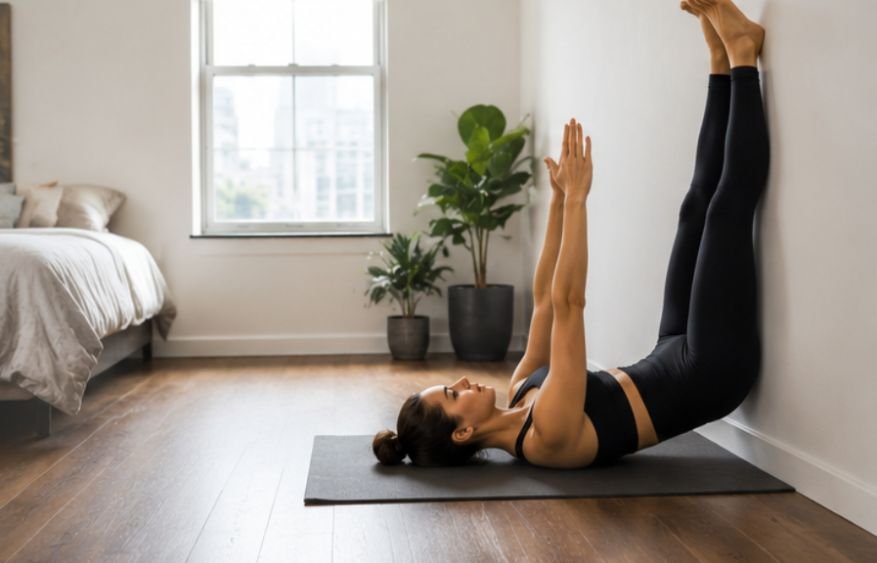
    Getting started with your first session requires nothing more than a clear patch of wall and a comfortable exercise mat. Lie down on your back with your feet resting flat against the vertical surface and your knees bent at a comfortable ninety-degree angle. Press your feet firmly into the wall to peel your hips up into a bridge, lift your heels into a quick calf raise, and roll your spine back down.

    Build Lower Body Strength

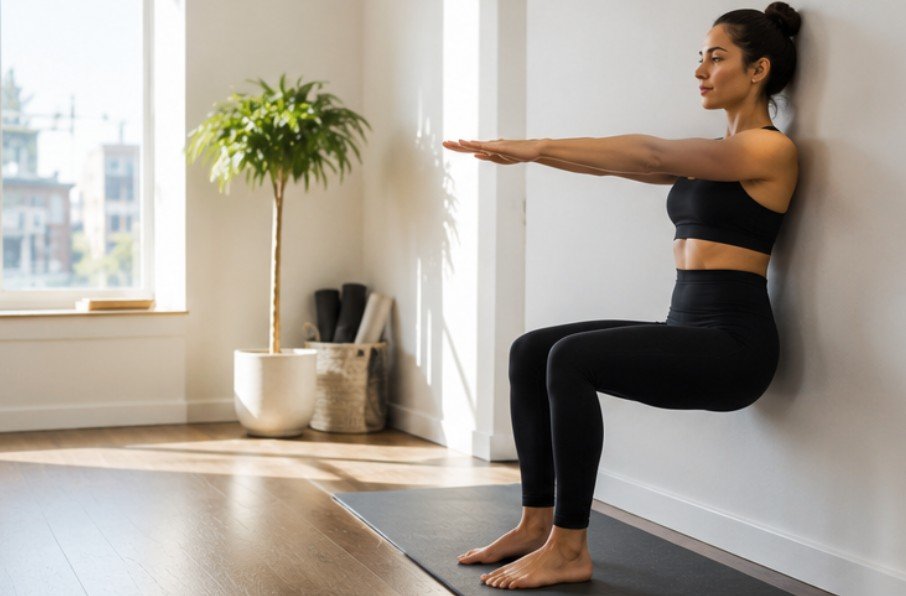
    Building lower body stamina becomes remarkably simple when you incorporate wall sits with calf raises into your weekly schedule. Stand with your back flat against a wall, walk your feet forward, and slide down until your knees form ninety-degree angles. While holding this sit, roll through the balls of your feet to lift your heels up and down.

    Strengthen Your Upper Body and Core

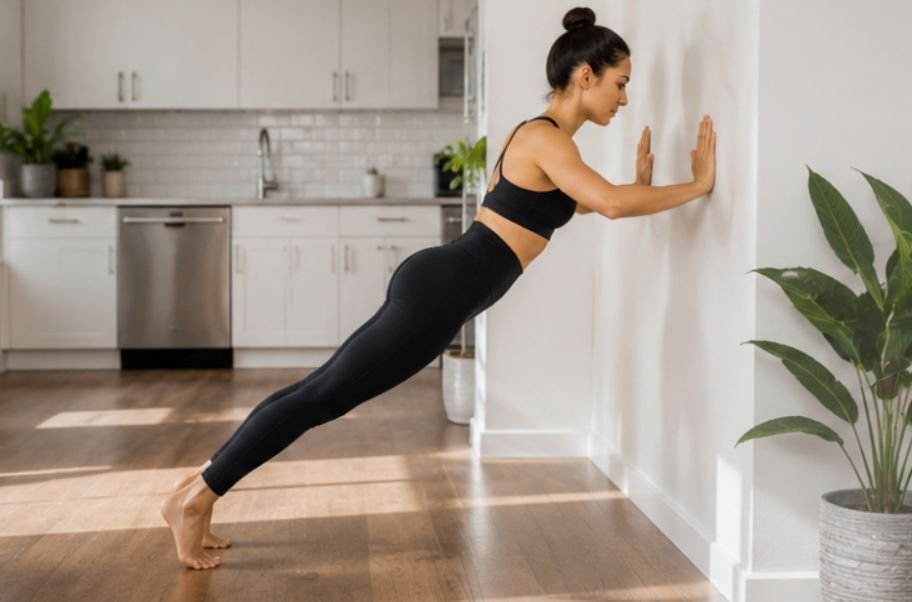
    Upper body strength and core stabilization come together beautifully when you practice single leg knee crunches and wall pushups. Place your hands on the wall at shoulder distance apart with your feet stepped back to create a comfortable leaning angle. Bend your elbows to bring your chest toward the surface and press back out while maintaining a completely straight line.

    Core Engagement And Breathing Secrets

    Core Engagement And Breathing Secrets

    Mindful movement becomes even more effective when it is supported by healthy routines away from the exercise mat. Practising digital self-care habits for a healthier lifestyle can reduce distractions, encourage better focus, and make it easier to stay consistent with short home workouts.

    Engage Your Deep Core

    Deep abdominal stabilization forms the absolute heart of every successful pilates sequence you will ever try. Pull your belly button inward toward your spine as if you are trying to zip up a snug pair of jeans. Maintaining this gentle core brace ensures your powerhouse muscles do the heavy lifting instead of your neck or shoulders.

    Coordinate Your Breathing

    Matching your breath to your physical exertion transforms a basic stretch into an effective conditioning session for your whole body. Inhale deeply through your nose to prepare your body for movement, and exhale completely through your mouth during the hardest part. This rhythm keeps your nervous system calm and focused.

    Move With Control, Not Momentum

    Avoiding momentum is crucial because swinging your limbs bypasses the deep stabilizing fibers entirely during your exercise routine. Moving at a slow and deliberate pace forces your muscles to work harder for better results. Quality always matters far more than quantity when practicing mindful movement.

    Common Mistakes To Avoid Safely

    Common Mistakes To Avoid Safely

    Allowing your spine to lift away from the floor during bridge or crunch movements can strain your lower back. Keep your core tight and continuously press your spine downward to maintain a safe and neutral pelvis position throughout your session.

    Tensing up and holding your breath starves your working muscles of essential oxygen and causes unnecessary physical fatigue quickly. Keep your breathing continuous and fluid, letting each exhale guide you deeper into your movement range without any strain.

    Rushing through repetitions defeats the core purpose of controlled resistance training designed to lengthen and strengthen your physique. Take your time with every single transition to maximize muscle engagement and protect your joints from accidental injury.

    Frequently Asked Questions

    1. Is wall pilates effective for beginners?

    Yes, wall pilates is extremely effective for beginners because it uses a stable wall for tactile feedback, balance, and gentle resistance, making it an ideal low-impact routine to build core strength and improve posture safely.

    2. How many minutes a day should you do wall pilates?

    You should typically practice wall pilates for about ten to twenty minutes a day, focusing on slow and controlled movements to see steady improvements in your overall flexibility, balance, and physical strength.

    3. Is there a 100% free wall pilates app?

    Most dedicated smartphone applications require paid subscriptions, but you can find completely free, high-quality guided wall pilates video tutorials and full-length follow-along sessions directly on platforms like YouTube.

    4. Is there a free wall Pilates workout plan available?

    Yes, many certified fitness instructors and wellness blogs offer free downloadable monthly calendar PDFs and structured beginner routines online that you can easily follow without spending any money.

    Time To Shine And Roll Out Your Mat

    improve balance, and develop better body awareness without needing expensive equipment or advanced fitness experience. With regular practice, these gentle movements can help increase flexibility, enhance posture, and boost confidence in your daily activities. 

    Start at your own pace, stay consistent, and focus on proper form rather than speed. Over time, you’ll notice meaningful improvements that make healthy movement feel both achievable and enjoyable. 

  • The Everyday Habits Behind Optimizing Your Sleep Schedule

    The Everyday Habits Behind Optimizing Your Sleep Schedule

    I used to think getting eight hours of sleep was the only thing that mattered. If I stayed in bed long enough, I assumed I’d wake up feeling refreshed. Some mornings that happened, but most days I still felt tired, unfocused, and ready for another cup of coffee before the day had even started. It took me a while to realize that sleep isn’t just about how long you stay in bed. It’s about how consistently you let your body rest.

    Once I started paying attention to the little things, everything began to feel different. Waking up at the same time, getting outside for a few minutes in the morning, and putting my phone away before bed seemed too simple to make a difference. But after sticking with those habits, falling asleep became easier, mornings felt less stressful, and my energy stayed more consistent throughout the day. That’s why optimizing your sleep schedule has become less about chasing perfect sleep and more about building a routine your body can rely on.

    Why Your Sleep Schedule Matters More Than You Think

    Why Your Sleep Schedule Matters More Than You Think

    Your body runs on an internal clock called the circadian rhythm. It controls when you naturally feel awake and when your body prepares for sleep. When your bedtime and wake-up time constantly change, that rhythm struggles to stay in sync.

    This is why sleeping in for several extra hours on weekends can sometimes leave you feeling even more tired on Monday. Your body prefers consistency. A predictable schedule helps regulate hormones like melatonin, supports deeper sleep, and improves focus, mood, and recovery throughout the day.

    The good news is that you don’t have to completely change your life overnight. A few steady habits often make a bigger impact than making dramatic changes for only a few days.

    Start With the Same Wake-Up Time Every Day

    Most people focus on bedtime first, but waking up at the same time every morning is often more important.

    A consistent wake-up time helps reset your biological clock, making it easier to feel sleepy when evening arrives. Even after a late night, getting up close to your usual time helps your body return to its normal rhythm much faster.

    Sleeping an extra two or three hours on weekends might feel rewarding in the moment, but it can make Sunday night feel surprisingly restless.

    Let Morning Light Do the Work

    Let Morning Light Do the Work

    Natural sunlight is one of the strongest signals your brain receives each day. Stepping outside within the first hour after waking tells your body it’s time to be alert.

    Even ten or fifteen minutes outdoors can support a healthier sleep schedule. Morning light also helps regulate melatonin production later in the evening, making it easier to fall asleep without relying on complicated bedtime routines.

    If you work indoors, taking your morning coffee outside or going for a short walk before starting work can become one of the easiest improvements to your daily routine.

    Build an Evening Routine That Feels Relaxing

    Your body doesn’t switch from full speed to deep sleep in a few minutes. It needs time to slow down.

    Instead of scrolling through social media until your eyes feel heavy, create a simple routine that tells your brain the day is ending. Reading a few pages of a book, stretching gently, listening to calming music, or writing tomorrow’s to-do list can all help reduce mental clutter before bed.

    These small routines become even more effective when repeated every night because your brain begins to associate them with sleep.

    Pay Attention to Food and Caffeine Timing

    Pay Attention to Food and Caffeine Timing

    What you consume during the day affects how well you sleep later that night.

    Caffeine can remain in your system for several hours, which is why many sleep specialists recommend avoiding coffee and energy drinks later in the afternoon. Heavy meals close to bedtime may also leave your digestive system working when your body should be preparing for rest.

    Choosing lighter evening meals and finishing dinner a few hours before bed often makes falling asleep feel more comfortable.

    Your Bedroom Should Help You Sleep

    Many people spend time improving their mattress but overlook the environment around it.

    A cool, dark, and quiet bedroom creates better conditions for restorative sleep. Experts generally recommend keeping the room between 60 and 67 degrees Fahrenheit because cooler temperatures help the body naturally prepare for sleep.

    Blackout curtains, comfortable bedding, and reducing unnecessary noise can all improve sleep quality without requiring expensive changes.

    Don’t Ignore What Happens During the Day

    Better sleep doesn’t begin at bedtime. It starts with the choices you make from the moment you wake up.

    Regular exercise supports deeper sleep, but intense workouts right before bed may leave some people feeling more alert. Limiting daytime naps to less than an hour also helps maintain a consistent sleep schedule, especially if you’re already struggling to fall asleep at night.

    These daytime choices work together, creating the foundation for better rest when evening arrives.

    If you’re looking to build healthier routines beyond bedtime, many of these ideas naturally fit alongside other sleep optimization habits that improve both sleep quality and overall well-being.

    The Biggest Mistakes That Disrupt Sleep

    The Biggest Mistakes That Disrupt Sleep

    Many people unknowingly make the same mistakes over and over.

    • Going to bed at different times every night.
    • Sleeping in for long periods on weekends.
    • Using phones or tablets right before bed.
    • Drinking caffeine too late in the day.
    • Expecting better sleep after only one or two nights of change.

    Sleep schedules improve gradually. Consistency matters much more than perfection.

    FAQs: The Everyday Habits Behind Optimizing Your Sleep Schedule

    1. How long does it take to improve a sleep schedule?
    Most people notice small improvements within a week, but building a consistent sleep schedule often takes several weeks of following the same routine every day.

    2. Is waking up at the same time more important than bedtime?
    Yes. A regular wake-up time helps regulate your body’s internal clock, making it easier to feel sleepy naturally at night.

    3. Can exercise improve sleep quality?
    Absolutely. Regular physical activity supports deeper sleep and better recovery, especially when it’s done earlier in the day rather than right before bedtime.

    4. Should I avoid screens before sleeping?
    Reducing screen time at least 30 minutes before bed can help your brain prepare for sleep because it limits blue light exposure and unnecessary mental stimulation.

    Why Better Sleep Begins Long Before Bedtime

    Optimizing your sleep schedule isn’t about finding the perfect bedtime or buying another sleep product. It’s about giving your body the same signals every day until healthy sleep becomes something you don’t have to think about. Morning sunlight, regular movement, balanced meals, and a relaxing evening routine may seem ordinary on their own, but together they create a rhythm that supports better energy, sharper focus, and more restorative sleep.

    The best sleep routine isn’t the most complicated one. It’s the one you can follow tomorrow, next week, and months from now.

  • How to Build a Balanced Meal With Protein and Fiber

    How to Build a Balanced Meal With Protein and Fiber

    A meal can look healthy yet leave you hungry an hour later. I experienced this whenever I ate a vegetable-heavy lunch without enough protein or relied on a protein shake with almost no fiber. Learning how to build a balanced meal with protein and fiber helped me create meals that felt complete, practical, and satisfying.

    The easiest method is to combine a protein anchor, fiber-rich produce, a quality carbohydrate, and a small amount of healthy fat. You do not need perfect measurements or complicated recipes.

    Why Protein and Fiber Belong on the Same Plate

    Protein supplies amino acids that the body uses to build and maintain muscles, skin, organs, and other tissues. Common sources include fish, poultry, eggs, dairy products, tofu, beans, lentils, nuts, and seeds.

    Fiber adds bulk to meals and comes mainly from plant foods. Vegetables, fruits, beans, whole grains, nuts, and seeds can all increase a meal’s fiber content.

    Pairing the two creates a more substantial plate than eating either nutrient alone. A bowl of plain pasta may provide energy but little lasting satisfaction. Adding chicken, white beans, spinach, and tomatoes creates a more complete meal.

    The FDA uses 28 grams as the Daily Value for fiber on a 2,000-calorie diet. Individual requirements can differ, but the number provides a useful label-reading reference.

    Use the Four-Part Balanced Plate Formula

    Use the Four-Part Balanced Plate Formula

    When I first learned how to build a balanced meal with protein and fiber, I stopped counting every ingredient. I began looking at the structure of the entire plate.

    Fill Half the Plate With Fiber-Rich Produce

    Use vegetables and fruit to fill roughly half the plate. Good choices include broccoli, spinach, carrots, cauliflower, Brussels sprouts, berries, apples, oranges, peppers, and leafy greens.

    You do not need five different vegetables. One generous serving of roasted broccoli and a piece of fruit can work. Frozen and canned produce also count, although it helps to check canned foods for added sodium or syrup.

    Aim for variety across the week rather than forcing variety into every meal.

    Add a Reliable Protein Anchor

    Reserve about one-quarter of the plate for protein. Chicken breast, fish, eggs, lean meat, Greek yogurt, cottage cheese, tofu, tempeh, and paneer can all serve as anchors.

    Beans and lentils also provide protein, although their protein content varies by serving. Plant proteins can contribute useful amino acids when you eat varied foods throughout the day.

    Your protein portion should suit your appetite, activity level, age, and health needs. The NIH provides a Dietary Reference Intake calculator because individual nutrient requirements are not identical.

    Choose a Fiber-Rich Carbohydrate

    Use the remaining quarter for a complex carbohydrate or whole grain. Brown rice, quinoa, oats, barley, sweet potatoes, whole-grain bread, and whole-wheat pasta are practical options.

    Whole grains usually provide more fiber than refined grains. They also make the plate more satisfying without requiring an oversized portion.

    A carbohydrate does not ruin a balanced meal. The problem is often a plate dominated by refined carbohydrates with little protein or produce.

    Finish With a Small Amount of Healthy Fat

    Add olive oil, avocado, nuts, pumpkin seeds, chia seeds, tahini, or another unsaturated fat.

    Fat improves flavor and can make vegetables more appealing. However, calorie-dense fats can quickly become large portions. A drizzle, spoonful, or small handful is usually enough for meal-building purposes.

    Build Meals With the Protein Anchor Method

    Build Meals With the Protein Anchor Method

    My most useful strategy for how to build a balanced meal with protein and fiber is choosing protein first.

    Start with one question: What is my protein anchor?

    Once you choose salmon, chicken, tofu, eggs, Greek yogurt, or beans, add two fiber layers. The first layer should be produce. The second can be a whole grain, starchy vegetable, legume, fruit, nut, or seed.

    For example, start with grilled chicken. Add roasted Brussels sprouts and a small baked sweet potato. Finish with olive oil or pumpkin seeds.

    This process works because it prevents the common habit of building an entire meal around bread, pasta, or rice and adding protein as an afterthought.

    Use Foods That Provide Protein and Fiber

    Use Foods That Provide Protein and Fiber

    Some ingredients do double duty. They make how to build a balanced meal with protein and fiber much easier when time or grocery options are limited.

    Lentils provide both plant protein and fiber. Chickpeas, black beans, kidney beans, split peas, edamame, and other legumes offer the same advantage. Nuts, seeds, quinoa, and oats also contribute varying amounts of both nutrients.

    A lentil bowl still benefits from vegetables and healthy fat. Dual-purpose foods simplify the plate, but they do not need to carry the entire meal.

    Try mixing chickpeas into a chicken salad, adding lentils to vegetable soup, or stirring edamame into a brown rice bowl.

    Three Balanced Meal Examples

    A Fast Protein and Fiber Breakfast

    Layer plain Greek yogurt with berries, oats, chia seeds, and sliced almonds.

    The yogurt acts as the protein anchor. Berries, oats, chia seeds, and almonds add fiber. Choose plain yogurt when you want more control over added sugar.

    For a savory breakfast, pair eggs with whole-grain toast, avocado, and sautéed spinach.

    A Plant-Forward Lunch Bowl

    Start with quinoa and chickpeas. Add cucumbers, grated carrots, spinach, tomatoes, and a spoonful of plain yogurt or tahini.

    This bowl uses chickpeas as a dual-purpose protein and fiber ingredient. Quinoa adds another layer of both, while the vegetables increase volume and variety.

    A Flexible Weeknight Dinner

    Pair baked salmon, tofu, chicken, or paneer with roasted broccoli and sweet potato wedges.

    This meal demonstrates how to build a balanced meal with protein and fiber without a detailed recipe. Change the protein, vegetable, seasoning, or grain while keeping the structure intact.

    Check Your Meal With the Five-Minute Audit

    Before eating, I use a quick meal audit. I ask:

    Does the meal contain a clear protein source? Does it contain at least one generous plant food? Is the main carbohydrate rich in fiber? Will the portion keep me comfortable rather than overfull?

    Packaged foods require one extra check. The FDA considers 5% Daily Value or less low and 20% or more high for a listed nutrient. A bread, wrap, cereal, or grain product with a higher fiber percentage can help strengthen the meal.

    This audit is more useful than labeling individual foods as good or bad. It evaluates how the meal works as a whole.

    Common Meal-Building Mistakes

    One mistake is treating a small garnish as the vegetable serving. A few lettuce leaves do not provide the same volume as a substantial salad or cooked vegetable portion.

    Another is assuming every “high-protein” product also contains fiber. Meat, fish, eggs, and many dairy products naturally contain little or no fiber. Pair them with plant foods.

    Do not depend entirely on protein bars and fiber powders. Convenient products can help, but whole foods usually add more texture, variety, vitamins, minerals, and satisfaction.

    Finally, increase fiber gradually if your current intake is low. Sudden large changes may cause digestive discomfort. Adequate fluid intake also matters when eating more fiber.

    Frequently Asked Questions

    1. How can I build a high-protein, high-fiber meal?

    Choose a protein anchor, add a generous vegetable portion, include beans or whole grains, and finish with fruit, nuts, or seeds.

    2. What foods contain both protein and fiber?

    Beans, lentils, chickpeas, split peas, edamame, nuts, seeds, quinoa, and oats provide varying amounts of both nutrients.

    3. How do I build a balanced vegetarian meal?

    Combine tofu, tempeh, eggs, Greek yogurt, paneer, beans, or lentils with vegetables, whole grains, and a healthy fat.

    4. Can breakfast contain enough protein and fiber?

    Yes. Greek yogurt with berries, oats, chia seeds, and nuts is one easy example of how to build a balanced meal with protein and fiber.

    Your Plate Is Ready to Pull Its Weight

    I no longer judge a meal by how colorful or low-calorie it appears. I check whether it has a real protein anchor and meaningful sources of fiber.

    The next time you prepare food, choose the protein first. Add two fiber layers, then finish the plate with flavor and healthy fat. That small routine turns random ingredients into a meal that works harder for you.